As the summer heat intensifies, a properly functioning air conditioner is essential for comfort. But what if your AC struggles to cool, leaving you wondering if it’s low on refrigerant, often referred to as “AC gas”? While accurately measuring refrigerant levels requires specialized HVAC tools, there are several observable signs and simple diagnostic checks you can perform without professional equipment to determine if low refrigerant is likely the culprit. Understanding these indicators can help you troubleshoot effectively and know when it’s time to call in an HVAC expert to restore your home’s cool.
Understanding Your AC’s Refrigerant and Why it Matters
At the heart of your air conditioning system’s cooling process is the refrigerant. This special chemical compound, like R-410A or R-32 in modern systems, continuously cycles through your AC unit, changing between liquid and gaseous states. It absorbs heat from inside your home and releases it outside, effectively “moving” heat to create a cooler indoor environment.
Proper refrigerant levels are absolutely critical for your AC’s performance. When the refrigerant is at the correct level, your system operates at peak efficiency, cooling your home effectively and consuming energy judiciously. However, if refrigerant levels are too low, the system has to work harder to achieve the desired temperature, leading to increased energy consumption, inadequate cooling, and potential damage to expensive components like the compressor. This not only impacts your comfort and utility bills but can also shorten the lifespan of your entire AC unit.
Can You Really Check AC Gas Level Without Tools? The Reality
The term “checking AC gas level” can be misleading for homeowners. Directly measuring the precise amount or pressure of refrigerant in your AC system requires specialized gauges and training. Attempting to open the sealed refrigerant lines yourself is dangerous, as refrigerant can cause chemical burns and frostbite, and its release into the atmosphere is harmful to the environment and often illegal.
Instead of a direct measurement, what homeowners can do is identify the telltale symptoms and perform simple diagnostic checks that strongly suggest low refrigerant. These methods don’t involve complex tools but rather keen observation and, in some cases, a basic thermometer. If these signs are present, it’s a clear signal to contact a certified HVAC technician who has the proper equipment and expertise to diagnose the issue accurately and safely recharge your system.
Warning Signs Your AC May Be Low on Refrigerant
Before diving into hands-on checks, familiarize yourself with these common indicators that your AC unit might be running low on refrigerant:
Warm Air Blowing from Vents
|
Our Picks for the Best Air conditioner in 2026
As an Amazon Associate I earn from qualifying purchases.
|
||
| Num | Product | Action |
|---|---|---|
| 1 | Midea 5,000 BTU EasyCool Small Window Air Conditioner - Cool up to 150 Sq. Ft. with Easy-to-Use Mechanical Controls and Reusable Filter, Perfect for Small Bedroom, Living Room, Home Office |

|
| 2 | Frigidaire 5,000 BTU Window-Mounted Air Conditioner, Cools Up to 150 Sq. Ft., Quiet Operation, Effortless Temperature Control, 2 Fan Speeds, Auto Restart, White |
|
| 3 | Midea 12,000 BTU U-Shaped Smart Inverter Window Air Conditioner–Cools up to 550 Sq. Ft., Ultra Quiet with Open Window Flexibility, Compatible with Alexa/Google Assistant, 35% Energy Savings (Renewed) |
|
| 4 | Shinco 8,000 BTU Portable Air Conditioner, AC Unit with Built-in Cool, Dehumidifier & Fan Modes for Room up to 350 sq.ft, Conditioner Remote Control, 24 Hour Timer, Installation Kit |
|
| 5 | Midea 8,000 BTU U Shaped Smart Inverter Window Air Conditioner - Cools 350 Sq Ft, Ultra Quiet with Open Window Flexibility - Alexa/Google Assistant Compatible - 37% Energy Savings, Remote (Updated) |
|
| 6 | Feelfunn 8,000 BTU Portable Air Conditioner - 3-in-1 Portable AC Unit for Rooms Up to 350 Sq. Ft., with Remote Control, Cooling, Dehumidifier & Fan Modes, AC Unit for Bedroom, Office, Apartment |
|
| 7 | Amazon Basics 5000-BTU Window Air Conditioner with Quiet Operation, Up to 150 Sqf, Cool and Fan Functions, Washable Filter, Adjustable Window Kit, Intuitive Mechanical Controls, for Small Room, White |
|
| 8 | 12000 BTU Portable Air Conditioner, 3-in-1 Portable AC Unit with Cooling, Dehumidifier and Fan Modes, Cools Up to 450 Sq.Ft, LED Display Air Conditioners with Window Kit and Remote Control |
|
| 9 | Amazon Basics 6000-BTU Window Air Conditioner with Quiet Operation, Up to 250 Sqf, Cool and Fan Functions, Washable Filter, Adjustable Window Kit, Digital Temperature Display, Remote Control, White |
|
| 10 | LEVOIT Tower Fan for Bedroom, 90° Oscillating Standing Fan with 28dB Quiet for Sleep, 25ft/s Velocity, 12H Timer, 5 Speeds 4 Modes, Remoter, Bladeless Room Fan for Home, Office, Indoor, 36 inch, White |
|
Perhaps the most obvious sign, if your air conditioner is running but the air coming out of your supply vents isn’t as cold as it should be, or feels only slightly cool, low refrigerant could be the cause. The refrigerant isn’t absorbing enough heat, so the air isn’t being properly chilled before entering your living space.
Ice Buildup on Coils or Lines
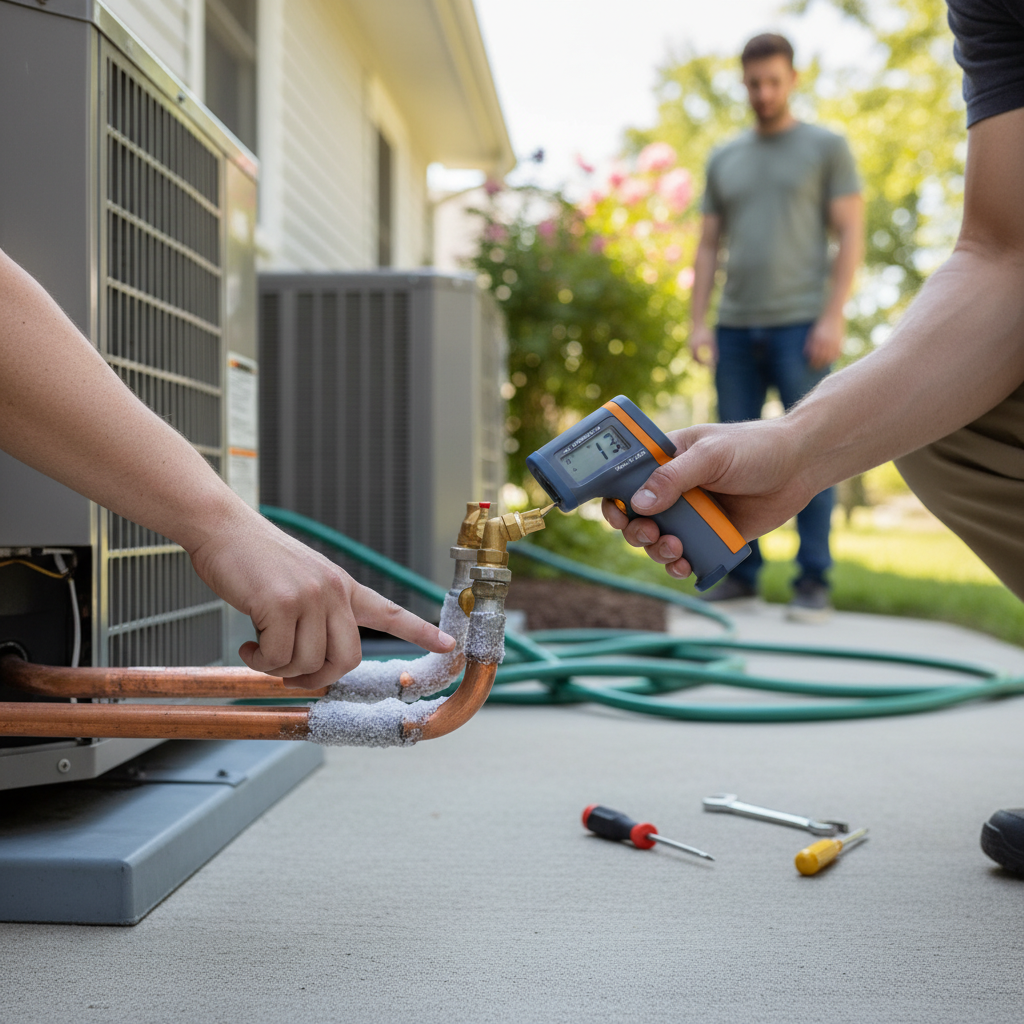
Low refrigerant can cause the evaporator coil (located in your indoor unit) or the copper refrigerant lines (both inside and outside) to become excessively cold, leading to ice formation. If you see ice on these components, it’s a strong indicator of a problem, often related to low refrigerant.
Hissing or Bubbling Noises
Refrigerant leaks are the most common reason for low refrigerant levels. If you hear a distinct hissing or bubbling sound emanating from your AC unit, particularly near the outdoor condenser or the indoor evaporator coil, it could signal refrigerant escaping through a small crack or loose connection.
AC Runs Constantly (Short Cycling)
An AC unit with insufficient refrigerant will struggle to reach the set temperature. This often causes it to run for extended periods or “short cycle,” meaning it turns on and off frequently without effectively cooling the space. Both scenarios lead to unnecessary wear and tear on the system.
Increased Energy Bills
When your AC has to work harder and run longer to achieve the desired cooling effect, it consumes more electricity. If you notice a sudden, unexplained spike in your electricity bills, especially during cooling season, it could be due to an inefficient system caused by low refrigerant.
Reduced Cooling Performance / Longer Cooling Times
Beyond just warm air, the overall cooling capacity of your system will diminish. Rooms may not cool down thoroughly, or it may take significantly longer for your home to reach the thermostat’s set temperature, indicating the system is underperforming.
Simple DIY Checks to Confirm Low Refrigerant Symptoms (No Complex Tools Required)
While you can’t measure refrigerant pressure, you can perform a few checks with minimal or no tools to support your suspicion of low refrigerant.
The Air Temperature Differential Test
A simple household thermometer can be surprisingly useful here.
- Indoor Air Difference: Measure the temperature of the air returning to your AC unit (at the return vent) and the temperature of the cool air blowing out of a supply vent. A healthy AC system typically produces a temperature difference of 16 to 22 degrees Fahrenheit. If your readings show a difference significantly lower than this range (e.g., less than 16°F), it suggests the unit isn’t removing enough heat, a common symptom of low refrigerant.
- Outdoor Air Difference: Step outside to your condenser unit. Feel the air blowing out of the top of the unit. This air should be noticeably warm, typically 10 to 30 degrees Fahrenheit hotter than the ambient outdoor air temperature. If the air feels only slightly warmer (e.g., just 5°F hotter than outside air), it’s another indication that the system isn’t effectively expelling heat, often due to low refrigerant.
Visual Inspection for Ice Formation
Carefully inspect your indoor evaporator coil (often behind a panel on your furnace or air handler) and the copper refrigerant lines leading to and from your outdoor condenser. If you observe any ice build-up on these components, shut off your AC immediately to prevent further damage. Ice is a strong visual cue for low refrigerant, as insufficient refrigerant can cause temperatures within the system to drop below freezing.
Listening for Leaks
As mentioned earlier, a hissing or bubbling sound can pinpoint a leak. Turn off any loud appliances or fans and listen carefully near your outdoor unit and around the indoor evaporator coil. A persistent hissing indicates refrigerant escaping, while bubbling might suggest a leak where refrigerant is mixing with oil or moisture.
The Soap Bubble Test (for leak detection)
If you suspect a leak but can’t hear it, and you can safely access the refrigerant line connections on your outdoor unit, a soap bubble test can confirm its presence.
- Mix dish soap and water to create a thick, bubbly solution.
- With your AC running, carefully spray or brush the solution onto suspected leak points, such as valve stems, flares, and joints on the copper lines.
- If refrigerant is escaping, it will cause bubbles to form and grow at the leak site. This method helps identify where a leak is, which is the root cause of low refrigerant.
“Many AC issues homeowners attribute to low refrigerant are actually symptoms of a deeper problem, often a leak. Identifying these symptoms early can save you from costly repairs down the line.” – HVAC Expert, John Smith
What to Do If You Suspect Low Refrigerant
If your DIY checks point towards low refrigerant, it’s crucial to understand that this is not a problem you should attempt to fix yourself. Adding refrigerant (recharging) without addressing the underlying leak is a temporary solution that wastes refrigerant and money. More importantly, mishandling refrigerant is dangerous and requires specialized tools and EPA certification.
Instead, your next step should always be to contact a qualified and certified HVAC technician. They have the necessary equipment to:
- Accurately measure refrigerant levels.
- Precisely locate any leaks using advanced detection methods.
- Safely repair the leak.
- Properly evacuate and recharge your system with the correct type and amount of refrigerant.
Tips for Maintaining Your AC and Preventing Refrigerant Issues
While you shouldn’t handle refrigerant yourself, proactive maintenance can help prevent issues:
- Regular Professional Maintenance: Schedule annual tune-ups with an HVAC technician. They can catch minor issues before they become major problems.
- Change Air Filters Regularly: A dirty air filter restricts airflow, which can cause your evaporator coil to freeze, mimicking symptoms of low refrigerant.
- Keep Outdoor Unit Clean: Clear away debris, leaves, and obstructions from around your outdoor condenser unit to ensure proper airflow.
Conclusion
Understanding how to check for low AC gas levels without specialized tools empowers you as a homeowner to identify potential problems early. By observing your AC’s performance, listening for unusual sounds, inspecting for ice, and performing a simple temperature differential test, you can gather valuable information. While these methods can’t provide a precise measurement, they serve as reliable indicators that your system is struggling due to insufficient refrigerant. Remember, if you suspect low refrigerant, the safest and most effective course of action is always to call a certified HVAC professional. They possess the expertise and equipment to diagnose the root cause, repair any leaks, and properly restore your AC’s refrigerant to optimal levels, ensuring your home stays cool and comfortable.
Do you have any other AC troubleshooting tips that have helped you identify issues at home?
Frequently Asked Questions
What causes an AC to lose refrigerant?
An AC system is a sealed loop, meaning refrigerant should not naturally deplete. The only reason for low refrigerant is a leak somewhere in the system, which can be caused by wear and tear, corrosion, or damage to the coils or lines.
Is it dangerous to run an AC with low refrigerant?
Yes, running an AC with low refrigerant can be detrimental. It can cause your compressor to overheat and fail prematurely, leading to very expensive repairs or even requiring a full system replacement. It also reduces efficiency and wastes energy.
How often should AC refrigerant be recharged?
An AC system should never need regular recharging. If your system is low on refrigerant, it indicates a leak that needs to be found and repaired by a professional. Refrigerant is not consumed like fuel; it circulates indefinitely in a healthy system.
Can I add refrigerant myself?
No, it is strongly advised against adding refrigerant yourself. Refrigerants are hazardous chemicals, and releasing them into the atmosphere is harmful and illegal. Furthermore, adding the wrong type or amount can severely damage your AC unit. Always consult a certified HVAC technician.
How much does it cost to fix low refrigerant?
The cost to fix low refrigerant varies widely depending on the type and location of the leak, the type of refrigerant needed, and your local labor rates. It typically involves finding and repairing the leak, then recharging the system. A professional diagnosis is necessary to get an accurate estimate.