Waking up to a warm house when your air conditioner should be blasting cold air is frustrating, especially if you suspect a frozen evaporator coil. This common HVAC issue can bring your cooling system to a halt, leaving you uncomfortable and wondering what to do. While it often signals a deeper problem, understanding how to diagnose and address a frozen AC evaporator coil yourself can save you time and discomfort, and potentially prevent more costly repairs. This comprehensive guide will walk you through the essential steps to identify, thaw, and troubleshoot your frozen AC coil, empowering you to restore comfort to your home.
Understanding Your AC Evaporator Coil and Why It Freezes
The evaporator coil is a critical component of your air conditioning system, typically located in your indoor unit (furnace or air handler). Its primary function is to absorb heat and moisture from the indoor air. As warm air passes over the coil, the liquid refrigerant inside it vaporizes, becoming cold enough to draw heat out of your home and cool the air that’s then circulated back into your living space.
However, several factors can cause this essential coil to freeze. The most common culprits are insufficient airflow, low refrigerant levels, and a dirty coil itself. When airflow is restricted, the evaporator coil cannot absorb enough heat from the air. This causes its surface temperature to drop below freezing, leading to condensation on the coil freezing into ice. Similarly, low refrigerant levels can cause the pressure inside the coil to drop significantly. According to HVAC principles, lower pressure correlates with lower boiling points for refrigerants, meaning the refrigerant gets excessively cold and can freeze the moisture on the coil. A dirty evaporator coil acts as an insulator, preventing proper heat transfer and contributing to the freezing cycle.
Recognizing the Signs of a Frozen AC Evaporator Coil
Identifying a frozen evaporator coil early can prevent further damage to your air conditioning system. The signs are often noticeable and should prompt immediate action. One of the most common indicators is your AC unit blowing warm air instead of cool air, even when running continuously. This happens because the ice on the coil acts as an insulator, preventing the refrigerant from effectively absorbing heat.
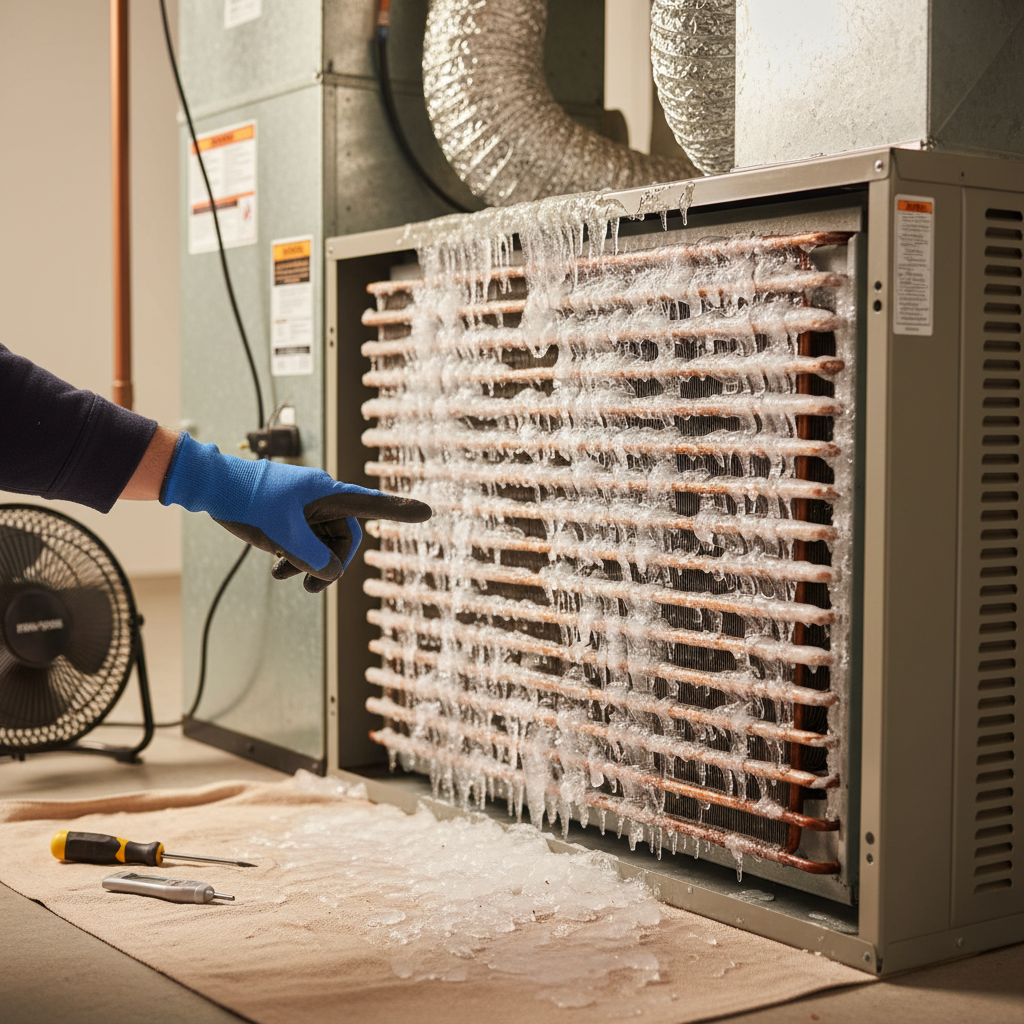
You might also notice a significant reduction in airflow from your vents, as the ice buildup restricts the passage of air. Visually inspecting your indoor unit can reveal frost or ice directly on the evaporator coil itself or on the refrigerant lines connected to it. Another clear sign is the presence of water leaks or puddles around your indoor unit or in the condensate drain pan. This occurs as the ice thaws and overflows the pan, indicating a freezing and thawing cycle. Finally, your AC system might run constantly without reaching the set temperature, or it may even shut down completely if safety mechanisms are triggered due to the severe imbalance caused by a frozen coil.
Step-by-Step DIY Guide to Fixing a Frozen AC Evaporator Coil
Addressing a frozen evaporator coil requires a systematic approach, starting with safety and progressing to troubleshooting the underlying causes.
Safety First: Preparations Before You Begin
|
Our Picks for the Best Air conditioner in 2026
As an Amazon Associate I earn from qualifying purchases.
|
||
| Num | Product | Action |
|---|---|---|
| 1 | 12000 BTU Portable Air Conditioner, 3-in-1 Portable AC Unit with Cooling, Dehumidifier and Fan Modes, Cools Up to 450 Sq.Ft, LED Display Air Conditioners with Window Kit and Remote Control |

|
| 2 | Midea 5,000 BTU EasyCool Small Window Air Conditioner - Cool up to 150 Sq. Ft. with Easy-to-Use Mechanical Controls and Reusable Filter, Perfect for Small Bedroom, Living Room, Home Office |
|
| 3 | Midea 8,000 BTU U Shaped Smart Inverter Window Air Conditioner - Cools 350 Sq Ft, Ultra Quiet with Open Window Flexibility - Alexa/Google Assistant Compatible - 37% Energy Savings, Remote (Updated) |
|
| 4 | Shinco 8,000 BTU Portable Air Conditioner, AC Unit with Built-in Cool, Dehumidifier & Fan Modes for Room up to 350 sq.ft, Conditioner Remote Control, 24 Hour Timer, Installation Kit |
|
| 5 | Feelfunn 8,000 BTU Portable Air Conditioner - 3-in-1 Portable AC Unit for Rooms Up to 350 Sq. Ft., with Remote Control, Cooling, Dehumidifier & Fan Modes, AC Unit for Bedroom, Office, Apartment |
|
| 6 | Amazon Basics 5000-BTU Window Air Conditioner with Quiet Operation, Up to 150 Sqf, Cool and Fan Functions, Washable Filter, Adjustable Window Kit, Intuitive Mechanical Controls, for Small Room, White |
|
| 7 | Amazon Basics 6000-BTU Window Air Conditioner with Quiet Operation, Up to 250 Sqf, Cool and Fan Functions, Washable Filter, Adjustable Window Kit, Digital Temperature Display, Remote Control, White |
|
| 8 | LEVOIT Tower Fan for Bedroom, 90° Oscillating Standing Fan with 28dB Quiet for Sleep, 25ft/s Velocity, 12H Timer, 5 Speeds 4 Modes, Remoter, Bladeless Room Fan for Home, Office, Indoor, 36 inch, White |
|
| 9 | Frigidaire 5,000 BTU Window-Mounted Air Conditioner, Cools Up to 150 Sq. Ft., Quiet Operation, Effortless Temperature Control, 2 Fan Speeds, Auto Restart, White |
|
| 10 | Midea 12,000 BTU U-Shaped Smart Inverter Window Air Conditioner–Cools up to 550 Sq. Ft., Ultra Quiet with Open Window Flexibility, Compatible with Alexa/Google Assistant, 35% Energy Savings (Renewed) |
|
Before attempting any work on your AC unit, safety is paramount. The very first step is to turn off your air conditioner immediately. Continuing to run a system with a frozen coil can lead to severe damage to the compressor, a very expensive component to replace. You should switch your thermostat from “Cool” to “Off.” For an added layer of safety, locate your home’s circuit breaker box and switch off the breaker that controls your outdoor AC unit and your indoor air handler or furnace. This ensures no electrical current is flowing to the unit while you work. Gather essential tools such as new air filters, a screwdriver, a soft brush, and possibly a wet/dry vacuum for the drain line.
Thawing the Frozen Coil
Once the power is off, the next step is to thaw the ice. The simplest method is to turn off the AC’s cooling function but switch your thermostat to “Fan Only” mode (if available). This will circulate warm indoor air over the coil, speeding up the thawing process without engaging the refrigeration cycle. Ensure the “cool” setting remains off during this period. Depending on the extent of the ice, this could take several hours, typically 2-3 hours, but sometimes up to 24 hours for a complete thaw. You can place towels around the base of the indoor unit to catch any melting ice and prevent water damage. While some suggest using a hairdryer on a low setting to expedite thawing, exercise extreme caution to avoid damaging sensitive components or causing electrical hazards.
Addressing Common Underlying Issues
After the coil has completely thawed, it’s crucial to investigate and address the underlying problem that caused the freezing. This is where you prevent a recurrence.
- Clean or Replace Air Filter: A dirty or clogged air filter is one of the most common causes of reduced airflow. Inspect your air filter and replace it with a clean one if it appears dirty or obstructed. Most manufacturers recommend changing filters every 1 to 3 months, especially during peak usage seasons.
- Clear Blocked Vents and Return Air Ducts: Walk through your home and ensure all supply and return air vents are open and unobstructed by furniture, curtains, or debris. Blocked vents restrict airflow, leading to pressure imbalances that can cause freezing.
- Clean the Evaporator Coil: If you can safely access the evaporator coil (often located within your air handler), gently clean any visible dirt or debris with a soft brush. Be very careful not to bend the delicate fins. For deeper cleaning, professional service is highly recommended, as improper cleaning can damage the coil.
- Check for Obstructed Drain Line: The condensate drain line removes moisture condensed by the evaporator coil. If this line is clogged (often by algae or sludge), water can back up, causing overflows and potentially contributing to freezing if the standing water freezes. Clear any blockages using a wet/dry vacuum or a plumber’s snake, if accessible.
When to Call a Professional
While many basic issues can be addressed through DIY methods, some problems require the expertise of a certified HVAC technician. If, after following all the thawing and troubleshooting steps, your AC coil continues to freeze, or if you suspect more complex issues, it’s time to call a professional. This includes situations involving low refrigerant levels, which often indicate a leak that requires specialized tools and licensed technicians to diagnose and repair. Faulty fan motors, significant refrigerant leaks, or internal compressor problems also necessitate professional intervention. Do not attempt to add refrigerant yourself, as it’s a regulated substance and improper handling can cause further damage to your system or be hazardous to your health.
Preventing Your AC Evaporator Coil from Freezing Again
Proactive maintenance is the best defense against a frozen AC evaporator coil. By adopting a few simple habits, you can significantly reduce the risk of your system freezing up.
The most critical preventive measure is regular air filter replacement. A clean air filter ensures optimal airflow, allowing your evaporator coil to function efficiently without dropping to freezing temperatures. Aim to check your filter monthly and replace it every 1 to 3 months, or more frequently if you have pets, allergies, or heavy AC usage.
Annual professional HVAC maintenance is another key step. During a tune-up, a technician will clean your coils, check refrigerant levels, inspect all components, and identify any potential issues before they escalate. This routine check-up helps maintain system efficiency and prevents small problems from leading to major breakdowns like a frozen coil.
Ensuring proper airflow throughout your home is also vital. Keep all supply and return vents clear of obstructions, such as furniture, rugs, or drapes. Also, avoid setting your thermostat too low, especially if your system struggles to keep up; extremely low settings can sometimes cause the coil to run colder than necessary. Lastly, regularly inspect your condensate drain line for any signs of blockages and clear them promptly to prevent water backup.
“Many homeowners overlook the simplicity of changing an air filter, yet it’s often the first line of defense against a frozen AC coil. Consistent airflow is non-negotiable for a healthy air conditioning system.” – HVAC Technician, Leading Comfort Solutions
Common Misconceptions About Frozen AC Coils
When dealing with a frozen AC coil, several misconceptions can lead to ineffective solutions or even further damage. Firstly, it’s crucial to understand that a frozen evaporator coil is never normal. It’s always a symptom of an underlying problem, not just a normal part of your air conditioner’s operation. If you see ice, something is wrong.
Another common misconception is that a frozen coil is always due to low refrigerant. While low refrigerant is a significant cause, it’s not the only one. Restricted airflow from a dirty filter or blocked vents is equally, if not more, common. Jumping to the conclusion of a refrigerant leak without proper diagnosis can lead to unnecessary service calls or dangerous DIY attempts to add refrigerant.
Finally, relying solely on a DIY fix has its limits. While thawing the coil and cleaning filters are excellent first steps, if the problem persists, it indicates a more complex issue. A DIY approach cannot address refrigerant leaks, faulty electrical components, or an improperly sized unit, all of which require professional expertise. Acknowledging these limitations will help you make informed decisions and seek professional help when necessary, ensuring the longevity and efficiency of your air conditioning system.
Conclusion
A frozen AC evaporator coil can quickly turn a comfortable home into an uncomfortable one, but with the right knowledge, you can often address the issue yourself. By carefully following the steps to safely thaw your system, then inspecting and resolving common airflow problems like dirty filters or blocked vents, you can often restore your air conditioner’s functionality. Remember, prevention is key, so prioritize regular filter changes and annual professional maintenance to keep your system running smoothly. However, if the problem persists or if you suspect a more serious issue like a refrigerant leak, don’t hesitate to contact a qualified HVAC technician. Your comfort and the health of your air conditioning system depend on it.
Do you regularly check your AC filter, or is it an out-of-sight, out-of-mind component for you?
Frequently Asked Questions
Why does my AC evaporator coil keep freezing even after thawing it?
If your AC evaporator coil repeatedly freezes after thawing, it indicates an unresolved underlying issue. Common reasons include persistent low refrigerant levels (suggesting a leak), a severely dirty evaporator coil that couldn’t be cleaned manually, a malfunctioning blower fan, or persistent airflow restrictions that you haven’t fully identified or cleared. A professional HVAC technician can diagnose these deeper problems accurately.
Can I run my AC with a frozen evaporator coil?
No, you should never run your AC with a frozen evaporator coil. Continuing to operate the unit when it’s frozen can put immense strain on the compressor, potentially leading to its complete failure. This can result in a very expensive repair or even require a full system replacement. Always turn off your AC immediately and allow the coil to thaw completely before investigating the cause.
How long does it take for an AC evaporator coil to thaw?
The time it takes for an AC evaporator coil to thaw depends on the extent of the ice buildup and ambient conditions. With the AC’s cooling turned off and the fan running to circulate warm air, it typically takes 2 to 3 hours. For severe freezing, especially without the fan running, it could take up to 24 hours for the ice to completely melt.
Is a frozen AC coil a sign of low refrigerant?
A frozen AC coil can indeed be a sign of low refrigerant, but it’s not the only cause. Low refrigerant reduces pressure in the coil, causing it to get excessively cold and freeze. However, restricted airflow from dirty air filters, blocked vents, or a malfunctioning blower fan are equally, if not more, common culprits. A professional can accurately determine if low refrigerant is the issue.
How often should I clean my evaporator coil to prevent freezing?
Your evaporator coil should be inspected and cleaned annually as part of a professional HVAC maintenance check-up. While you can gently brush off superficial dirt if you have safe access, deep cleaning requires specialized tools and expertise to avoid damaging the delicate fins. Regular air filter changes are the best DIY prevention for keeping the coil clean.