Choosing an air conditioner is a significant investment for any homeowner, and while many focus on brand, BTU, or energy ratings, a crucial component often goes overlooked: the condenser coil material. The choice between copper and aluminum for your AC condenser can profoundly influence its lifespan, efficiency, and maintenance costs. Understanding the distinct properties of these two metals is essential for making an informed decision that ensures lasting comfort and value.
Overview of Air Conditioner Condenser Coils
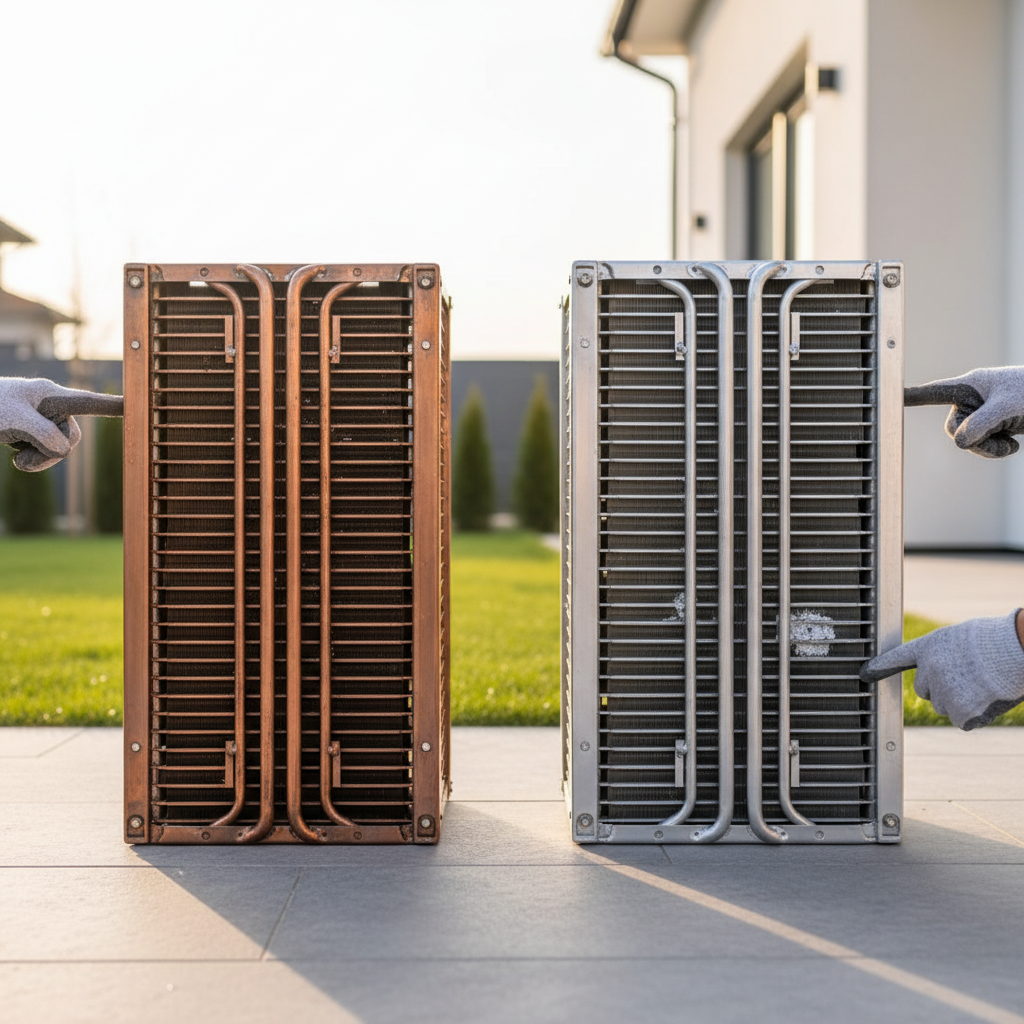
AC condenser coils are the unsung heroes of your cooling system. Located in the outdoor unit, these coils are responsible for releasing the heat absorbed from your indoor air into the environment, transforming the refrigerant from a hot gas back into a liquid to continue the cooling cycle. Without an efficient condenser, your air conditioner cannot effectively cool your home.
Historically, copper was the dominant material in HVAC manufacturing due to its malleability, strength, and excellent heat transfer properties. However, as the industry evolved, seeking lighter and more cost-effective solutions, aluminum emerged as a viable alternative. Innovations like microchannel coil designs further advanced aluminum’s capabilities, allowing it to compete in efficiency and specific corrosion resistance scenarios. Today, both materials, along with hybrid configurations, play significant roles in modern air conditioning systems, each with unique advantages and considerations.
Key Factors to Consider When Choosing an AC Condenser
When evaluating which condenser coil material is best for your home, several critical factors come into play. Each material offers a different set of strengths and weaknesses that can impact your system’s performance, durability, and long-term costs.
Material Composition and Properties
The inherent characteristics of copper and aluminum dictate much of their performance in an AC condenser.
- Copper: Known for its robustness, copper boasts superior thermal conductivity, approximately 400 W/m·K. This means it transfers heat exceptionally well, making it highly efficient. Copper coils are also praised for their strength and ability to withstand high pressures within the refrigeration system. Furthermore, copper naturally forms a passivation layer, which provides some level of corrosion protection.
- Aluminum: Aluminum is considerably lighter and more malleable than copper. While its thermal conductivity is lower (around 205 W/m·K), engineers compensate for this with innovative coil designs. Aluminum naturally develops an oxide layer that offers corrosion protection, making it advantageous in certain environments. Its lighter weight also contributes to easier handling and installation.
|
Our Picks for the Best Air conditioner in 2026
As an Amazon Associate I earn from qualifying purchases.
|
||
| Num | Product | Action |
|---|---|---|
| 1 | 12000 BTU Portable Air Conditioner, 3-in-1 Portable AC Unit with Cooling, Dehumidifier and Fan Modes, Cools Up to 450 Sq.Ft, LED Display Air Conditioners with Window Kit and Remote Control |

|
| 2 | Amazon Basics 5000-BTU Window Air Conditioner with Quiet Operation, Up to 150 Sqf, Cool and Fan Functions, Washable Filter, Adjustable Window Kit, Intuitive Mechanical Controls, for Small Room, White |
|
| 3 | LEVOIT Tower Fan for Bedroom, 90° Oscillating Standing Fan with 28dB Quiet for Sleep, 25ft/s Velocity, 12H Timer, 5 Speeds 4 Modes, Remoter, Bladeless Room Fan for Home, Office, Indoor, 36 inch, White |
|
| 4 | Midea 5,000 BTU EasyCool Small Window Air Conditioner - Cool up to 150 Sq. Ft. with Easy-to-Use Mechanical Controls and Reusable Filter, Perfect for Small Bedroom, Living Room, Home Office |
|
| 5 | Amazon Basics 6000-BTU Window Air Conditioner with Quiet Operation, Up to 250 Sqf, Cool and Fan Functions, Washable Filter, Adjustable Window Kit, Digital Temperature Display, Remote Control, White |
|
| 6 | Shinco 8,000 BTU Portable Air Conditioner, AC Unit with Built-in Cool, Dehumidifier & Fan Modes for Room up to 350 sq.ft, Conditioner Remote Control, 24 Hour Timer, Installation Kit |
|
| 7 | Feelfunn 8,000 BTU Portable Air Conditioner - 3-in-1 Portable AC Unit for Rooms Up to 350 Sq. Ft., with Remote Control, Cooling, Dehumidifier & Fan Modes, AC Unit for Bedroom, Office, Apartment |
|
| 8 | Midea 8,000 BTU U Shaped Smart Inverter Window Air Conditioner - Cools 350 Sq Ft, Ultra Quiet with Open Window Flexibility - Alexa/Google Assistant Compatible - 37% Energy Savings, Remote (Updated) |
|
| 9 | Frigidaire 5,000 BTU Window-Mounted Air Conditioner, Cools Up to 150 Sq. Ft., Quiet Operation, Effortless Temperature Control, 2 Fan Speeds, Auto Restart, White |
|
| 10 | Midea 12,000 BTU U-Shaped Smart Inverter Window Air Conditioner–Cools up to 550 Sq. Ft., Ultra Quiet with Open Window Flexibility, Compatible with Alexa/Google Assistant, 35% Energy Savings (Renewed) |
|
Lifespan and Durability
The longevity of your AC condenser is a primary concern for any homeowner. Both materials have different pathways to wear and tear.
- Copper: Under ideal conditions, copper coils are renowned for their extended service life, typically lasting 10 to 15 years, and potentially even 15 to 20 years in clean, dry climates. Its inherent strength provides resilience against mechanical damage and the constant pressure fluctuations of an HVAC system. However, copper has a notable vulnerability: formicary corrosion. This chemical reaction, often triggered by volatile organic compounds (VOCs) found in indoor air (e.g., from cleaning products, paints, or adhesives) combined with moisture, creates microscopic “pinhole” leaks over time. These leaks, often invisible, can lead to refrigerant loss and a decline in performance.
- Aluminum: Aluminum coils generally offer a service life of 8 to 12 years. They are more prone to physical damage, especially cracking if mishandled during installation or service, due to their thinner tubing. Once the protective surface oxide layer is compromised, aluminum can deteriorate faster than copper. However, a significant advantage of aluminum is its resistance to formicary corrosion. In humid or salty environments, specially coated aluminum coils can even outlast bare copper coils, providing enhanced protection against salt corrosion and specific forms of chemical degradation.
Thermal Conductivity and Energy Efficiency
Heat transfer efficiency is crucial for how effectively your AC cools and how much energy it consumes.
- Copper’s Edge: Copper’s significantly higher thermal conductivity gives it an inherent advantage in heat transfer. This property allows copper coils to facilitate faster heat exchange, requiring shorter coil lengths and potentially a lower refrigerant charge, leading to quicker cooling response and potentially higher energy efficiency per square inch. This makes copper a preferred choice for systems prioritizing maximum energy efficiency and rapid cooling.
- Aluminum’s Innovation: While aluminum’s raw thermal conductivity is lower, modern engineering has largely mitigated this difference. Manufacturers design aluminum coils with increased surface area, often featuring thinner fins, smaller tube diameters, and multi-path “microchannel” circuits. These design innovations allow aluminum coils to match or even exceed the performance of traditional copper coils in terms of heat transfer and overall system efficiency. Therefore, contemporary efficiency is often more a function of coil design than solely the material itself, with high SEER/SEER2 ratings indicating optimized performance regardless of the coil material.
Corrosion Resistance
Corrosion is a leading cause of coil failure, and each material reacts differently to various environmental factors.
- Copper’s Protection: Copper condenser coils generally exhibit excellent natural corrosion resistance due to the formation of stable protective surface films. This characteristic enables reliable operation in challenging environments, including coastal areas with salt spray and industrial zones with aggressive atmospheric pollutants. However, copper remains uniquely susceptible to formicary corrosion, which can create troublesome pinhole leaks.
- Aluminum’s Vulnerability: Aluminum tube coils provide adequate corrosion resistance in dry, controlled environments due to their natural oxide layer. They are naturally resistant to formicary corrosion, a common issue for copper. However, aluminum is susceptible to galvanic corrosion when in direct contact with dissimilar metals like copper, necessitating careful installation practices. Moreover, uncoated aluminum can rapidly deteriorate in humid environments, particularly in the presence of salt, developing a white coating of aluminum oxide and pitting. Coastal installations for aluminum coils often require special protective coatings and more frequent maintenance.
Repairability and Maintenance
The ease and cost of repairing a leaky coil can significantly impact your long-term ownership experience.
- Copper: The Repairable Choice: If a copper coil develops a leak, a skilled HVAC technician can typically repair it on-site by brazing (a form of welding). This means that minor issues or pinholes can often be fixed quickly and affordably, without the need for a full coil replacement. Copper’s forgiving nature and field-repairability contribute to its popularity among many professionals, and it’s also highly recyclable.
- Aluminum: Replace, Don’t Repair: Aluminum coils are considerably more challenging to repair. Due to aluminum’s rapid oxidation when exposed to air, reliably brazing or soldering a leak is nearly impossible. In most cases, a damaged aluminum coil necessitates a complete replacement, which can be a substantial expense, especially outside of warranty periods. Both coil types demand consistent maintenance, including regular filter changes and annual coil cleaning. However, aluminum coils require gentler cleaning procedures to prevent surface damage.
Cost and Environmental Impact
Beyond performance, the initial purchase price and environmental considerations play a role in decision-making.
- Upfront Cost: Aluminum coils are typically more budget-friendly. They are generally 20-40% less expensive to manufacture than copper coils, translating to lower initial costs for AC units equipped with them. This makes aluminum a popular choice for homeowners with tighter budgets or for large-scale installations where initial cost savings are a priority.
- Long-term Value: While copper coils have a higher upfront cost due to the price of raw materials and manufacturing complexity, their superior durability and energy efficiency can often lead to lower lifecycle costs. Fewer replacements and potentially reduced energy bills can offset the initial investment over the system’s lifespan. An unfortunate economic factor for copper is its higher resale value, which can make units with copper coils a target for theft, potentially leading to expensive replacement costs if the entire unit is damaged.
- Environmental Considerations: Both copper and aluminum are highly recyclable materials, which is a positive from an environmental standpoint. Copper is nearly 100% recoverable and reusable. Aluminum is also recyclable, though the reprocessing often requires more energy. However, aluminum’s lighter weight contributes to reduced shipping emissions, which can help offset some of its energy footprint.
Comparing Popular AC Coil Configurations
To provide a clearer picture, here’s a detailed comparison of common AC coil configurations based on material:
| Feature | Copper Condenser Coils | Aluminum Tube Coils | Hybrid Coils (Copper Tubes + Aluminum Fins) |
|---|---|---|---|
| Typical Lifespan | 10-15+ years (up to 15-20 in dry, clean conditions) | 8-12 years (can be longer with coatings in harsh environments) | Variable, generally good due to combined material strengths |
| Thermal Conductivity | Superior (approx. 400 W/m·K), leading to excellent heat transfer | Good (approx. 205 W/m·K), performance often matched by innovative design | High efficiency combining copper’s conductivity with aluminum’s surface area |
| Corrosion Resistance | Excellent overall, but susceptible to formicary corrosion from VOCs and moisture | Good in dry, controlled environments; resistant to formicary; prone to galvanic corrosion if mixed with copper; deteriorates in humid/salty if uncoated | Good, but careful design is needed to prevent galvanic corrosion between metals |
| Durability | High strength, resistant to mechanical damage and high pressure | Lighter, more malleable, can be prone to cracking if mishandled during service | Robust due to copper tubes; lighter overall with aluminum fins |
| Repairability | Relatively easy to repair on-site by brazing small leaks | Typically requires full coil replacement, as repairs are difficult | Generally easier to repair due to the copper tubing |
| Upfront Cost | Higher initial investment due to material and manufacturing costs | Lower (20-40% less expensive to manufacture) | Moderate, aiming to balance cost and performance |
| Best For | Demanding environments (industrial, high-pressure), high-efficiency systems, long-term investment in stable climates | Budget-conscious projects, modern compact designs, environments where formicary corrosion is a primary concern | Seeking a balance of performance, durability, and cost-effectiveness |
Choosing the Right Condenser for Your Home
Making the best decision for your home involves a careful assessment of your specific circumstances and priorities.
Assess Your Environmental Conditions
Your local climate plays a critical role in how well a coil material will perform and how long it will last.
- Dry Inland Climate: In areas with low humidity and minimal airborne pollutants, copper coils generally perform exceptionally well, offering long life and consistent efficiency.
- Coastal or Humid Climate: For homes near the ocean or in regions with high humidity and potential salt air, specially coated aluminum or hybrid coils might offer superior corrosion resistance. These protective coatings are designed to withstand the harsh conditions that can lead to rapid deterioration in bare metals.
- Indoor Air Quality: If your home frequently has high levels of volatile organic compounds (VOCs) from new furniture, paints, or cleaning agents, consider coated copper or aluminum coils that are less susceptible to formicary corrosion.
Prioritize Your Needs
Your personal priorities will guide your choice between the materials.
- Long-term Durability & Repairability: If you prioritize a system that can withstand wear and tear and be easily repaired over its lifespan, copper is often the preferred choice.
- Upfront Cost & Lightweight: If initial cost savings and a lighter unit for easier installation are more critical, aluminum offers significant advantages.
- Energy Efficiency: Both materials can achieve high energy efficiency, especially with modern coil designs. Focus on the system’s overall SEER/SEER2 ratings rather than just the coil material when efficiency is a top concern.
Seek Professional Advice
The complexities of HVAC systems and material science mean that expert guidance is invaluable. Consult with a trusted HVAC professional who can thoroughly evaluate your specific needs, assess your local climate, and understand your budget to recommend the optimal coil material and system. An expert will also ensure proper installation, which is crucial for the longevity of any coil type.
Maintenance Tips to Maximize Coil Lifespan
Regardless of whether you choose a copper or aluminum condenser, proper maintenance is the most critical factor in maximizing its lifespan and ensuring efficient operation.
- Regular Filter Changes: A dirty air filter restricts airflow and forces your system to work harder, leading to potential coil freeze-ups and premature wear. It also allows dirt and debris to accumulate on the coil, reducing heat transfer efficiency.
- Annual Coil Cleaning: Schedule professional coil cleaning annually. Over time, outdoor condenser coils collect dirt, leaves, and other debris, hindering heat dissipation. Use a soft brush or an approved coil cleaner. Avoid harsh acidic cleaners, especially on aluminum coils, as they can strip protective coatings and accelerate corrosion.
- Inspect Drain Pans: Ensure the drain pan and condensate line are clear of blockages and standing water. Stagnant water can promote corrosion and mold growth.
- Check Refrigerant Charge: An incorrect refrigerant charge can significantly impact coil temperatures, leading to inefficient operation and stressing the coil walls, increasing the risk of leaks.
- Professional Servicing: Regular professional maintenance not only extends coil life but also ensures your entire HVAC system operates at peak efficiency, preventing minor issues from escalating into costly repairs.
“The choice between copper and aluminum often boils down to balancing initial investment with long-term resilience against environmental factors. What works best in a dry, inland climate might falter rapidly in a coastal environment, highlighting the need for a tailored approach based on your home’s unique conditions.” – Admin, reviewrnz.com, HVAC Technician with 10+ years of experience
Conclusion
The debate between copper and aluminum condensers isn’t about one being universally “better” than the other; rather, it’s about which material is optimal for your specific needs and environment. Copper offers superior thermal conductivity, inherent durability, and easier repairability, making it a robust, long-lasting choice, especially in stable, dry climates. Aluminum, on the other hand, provides cost-effectiveness, a lighter footprint, and specific corrosion resistance benefits, particularly in modern microchannel designs or with protective coatings, which can be advantageous in humid or coastal areas.
Ultimately, your decision should carefully weigh factors like your local climate, budget, long-term performance expectations, and commitment to maintenance. Consulting with a qualified HVAC professional will help you navigate these considerations and choose the condenser coil material that will provide the optimal balance of performance and longevity for your home, ensuring comfortable living for years to come.
Frequently Asked Questions
Which AC coil material is generally more expensive?
Aluminum coils typically have a lower upfront cost than copper coils due to their material pricing and manufacturing processes. However, copper’s superior durability and energy efficiency can often lead to better long-term value, potentially offsetting the initial higher investment through reduced maintenance and energy bills.
Can aluminum coils be repaired like copper coils?
Generally, no. Copper coils can often be brazed on-site to fix minor leaks, making repairs more cost-effective and extending the coil’s life. Aluminum coils, however, are difficult to repair due to rapid oxidation when exposed to air, and typically require complete replacement if a leak occurs, which can be a significant expense.
How does humidity affect copper and aluminum condensers?
In humid or salty environments, specially coated aluminum coils can offer superior corrosion resistance and potentially longer lifespans than bare copper coils, which are more susceptible to pitting and formicary corrosion from airborne contaminants and moisture in such conditions. Copper typically performs better in dry, clean environments.
What is formicary corrosion, and which coil material is more susceptible?
Formicary corrosion is a type of localized chemical corrosion that creates microscopic “pinhole” leaks in HVAC coils. It is primarily a concern for copper coils and is often triggered by volatile organic compounds (VOCs) found in indoor air, combined with moisture. Aluminum coils are naturally more resistant to this specific type of corrosion.
Does the coil material impact energy efficiency?
Yes, copper has higher inherent thermal conductivity, meaning it transfers heat more efficiently. While aluminum’s raw conductivity is lower, modern coil designs, such as microchannel technology, can compensate by significantly increasing surface area. This allows aluminum systems to achieve comparable energy efficiency, making the overall system design and its SEER/SEER2 ratings more critical indicators of efficiency than the coil material alone.