Choosing the right refrigerant gas for your air conditioning system is more critical than ever. It’s not just about keeping cool; it’s about efficiency, safety, and our planet’s future. For years, R410A was the go-to choice, hailed as an advancement over older, ozone-depleting refrigerants. However, with evolving environmental standards and technological innovations, R32 refrigerant gas has emerged as a superior, eco-friendlier alternative, quickly becoming the preferred option in new HVAC systems worldwide. This comprehensive guide delves into a head-to-head comparison of R32 and R410A, equipping you with the knowledge to make an informed decision for your home or business.
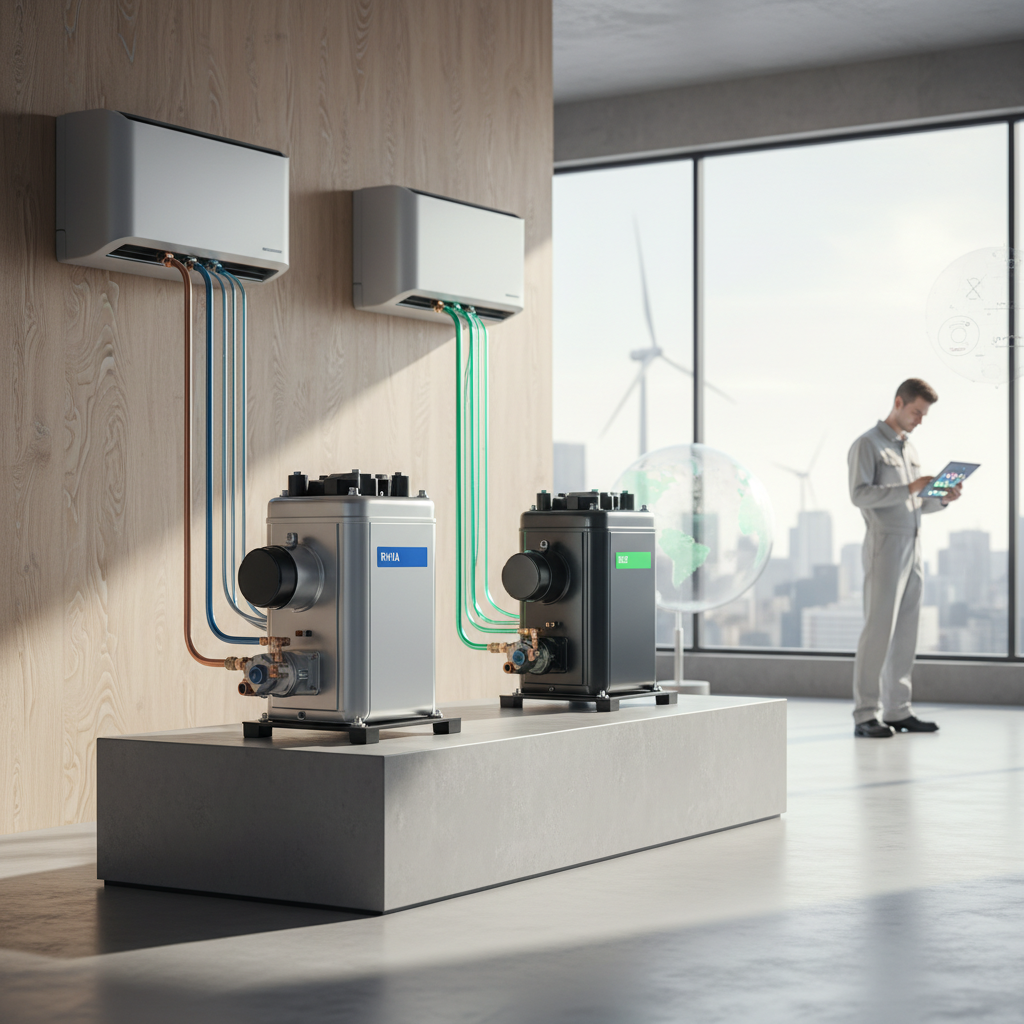
Understanding Refrigerant Gases in HVAC Systems
Refrigerants are the lifeblood of any air conditioning system, facilitating the transfer of heat to cool or warm indoor spaces. These specialized compounds cycle through evaporation and condensation, absorbing heat from one area and releasing it into another. The evolution of refrigerants has been driven by the need for greater efficiency and, crucially, reduced environmental impact.
The journey saw the phase-out of ozone-depleting substances like R22, paving the way for refrigerants with zero ozone depletion potential (ODP). R410A was a significant step in this direction, yet its high Global Warming Potential (GWP) has led to the development and widespread adoption of next-generation refrigerants like R32, which boasts a much lower GWP, addressing pressing climate change concerns.
R410A Refrigerant Gas: The Former Industry Standard
R410A has been a dominant refrigerant in residential and commercial HVAC systems for over two decades, largely replacing R22. It marked a crucial transition in the industry, offering improved performance and zero ozone depletion.
Key Characteristics and Composition
|
Our Picks for the Best Air conditioner in 2026
As an Amazon Associate I earn from qualifying purchases.
|
||
| Num | Product | Action |
|---|---|---|
| 1 | Feelfunn 8,000 BTU Portable Air Conditioner - 3-in-1 Portable AC Unit for Rooms Up to 350 Sq. Ft., with Remote Control, Cooling, Dehumidifier & Fan Modes, AC Unit for Bedroom, Office, Apartment |

|
| 2 | Midea 12,000 BTU U-Shaped Smart Inverter Window Air Conditioner–Cools up to 550 Sq. Ft., Ultra Quiet with Open Window Flexibility, Compatible with Alexa/Google Assistant, 35% Energy Savings (Renewed) |
|
| 3 | 12000 BTU Portable Air Conditioner, 3-in-1 Portable AC Unit with Cooling, Dehumidifier and Fan Modes, Cools Up to 450 Sq.Ft, LED Display Air Conditioners with Window Kit and Remote Control |
|
| 4 | Midea 5,000 BTU EasyCool Small Window Air Conditioner - Cool up to 150 Sq. Ft. with Easy-to-Use Mechanical Controls and Reusable Filter, Perfect for Small Bedroom, Living Room, Home Office |
|
| 5 | Frigidaire 5,000 BTU Window-Mounted Air Conditioner, Cools Up to 150 Sq. Ft., Quiet Operation, Effortless Temperature Control, 2 Fan Speeds, Auto Restart, White |
|
| 6 | Amazon Basics 6000-BTU Window Air Conditioner with Quiet Operation, Up to 250 Sqf, Cool and Fan Functions, Washable Filter, Adjustable Window Kit, Digital Temperature Display, Remote Control, White |
|
| 7 | Shinco 8,000 BTU Portable Air Conditioner, AC Unit with Built-in Cool, Dehumidifier & Fan Modes for Room up to 350 sq.ft, Conditioner Remote Control, 24 Hour Timer, Installation Kit |
|
| 8 | LEVOIT Tower Fan for Bedroom, 90° Oscillating Standing Fan with 28dB Quiet for Sleep, 25ft/s Velocity, 12H Timer, 5 Speeds 4 Modes, Remoter, Bladeless Room Fan for Home, Office, Indoor, 36 inch, White |
|
| 9 | Amazon Basics 5000-BTU Window Air Conditioner with Quiet Operation, Up to 150 Sqf, Cool and Fan Functions, Washable Filter, Adjustable Window Kit, Intuitive Mechanical Controls, for Small Room, White |
|
| 10 | Midea 8,000 BTU U Shaped Smart Inverter Window Air Conditioner - Cools 350 Sq Ft, Ultra Quiet with Open Window Flexibility - Alexa/Google Assistant Compatible - 37% Energy Savings, Remote (Updated) |
|
R410A is a hydrofluorocarbon (HFC) blend, specifically an almost azeotropic mixture composed of 50% difluoromethane (R32) and 50% pentafluoroethane (R125). This blend was designed to be non-ozone depleting, a significant improvement over its predecessor. It operates at higher pressures than R22, requiring specifically designed compressors and components.
Performance and Efficiency
When it was introduced, R410A offered good cooling efficiency and a higher heat transfer coefficient compared to R22, allowing systems to absorb and release heat more effectively. This contributed to better cooling performance and reduced energy consumption for its era. However, R410A systems generally have a higher volumetric cooling capacity, which often necessitated larger piping in some applications.
Environmental Impact
While R410A has a zero Ozone Depletion Potential (ODP), meaning it does not harm the Earth’s protective ozone layer, it possesses a high Global Warming Potential (GWP) of approximately 2,088. This means that if released into the atmosphere, R410A traps heat 2,088 times more effectively than carbon dioxide over a 100-year period, contributing significantly to global warming. This high GWP is the primary reason behind its current phase-down in many regions.
Safety and Handling
R410A is classified as an A1 refrigerant by ASHRAE, indicating it is non-flammable and has low toxicity. The inclusion of R125, a flame suppressant, in its blend ensures its non-flammable properties, making it a safe choice for widespread use, provided proper handling and maintenance procedures are followed by certified technicians.
R32 Refrigerant Gas: The Eco-Friendly Evolution
R32, or difluoromethane, represents a significant leap forward in refrigerant technology. As a single-component HFC, it offers a compelling combination of environmental benefits, enhanced efficiency, and performance, positioning it as the refrigerant of choice for the future.
Key Characteristics and Composition
R32 is also a hydrofluorocarbon (HFC), but unlike R410A, it is a single-component refrigerant, not a blend. It has a chemical formula of CH₂F₂. Like R410A, R32 has a zero Ozone Depletion Potential (ODP), ensuring it does not contribute to ozone layer depletion.
Environmental Impact
One of R32’s most significant advantages is its substantially lower Global Warming Potential (GWP), which is approximately 675. This is roughly one-third of R410A’s GWP, meaning it contributes far less to global warming in the event of a leak. This reduced environmental footprint aligns with global efforts to combat climate change and meet stringent environmental regulations.
Performance and Efficiency
R32 boasts superior thermodynamic properties that translate into higher energy efficiency and enhanced cooling capacity. Systems using R32 can achieve faster cooling with reduced power consumption, leading to lower electricity bills for consumers. It has better heat transfer characteristics and requires about 20-30% less refrigerant charge than R410A for the same cooling capacity, making it more resource-efficient. While R32 operates at a higher pressure and can have a higher discharge temperature, requiring specific system designs to manage these conditions, its overall efficiency gains are notable.
Safety Considerations
R32 is classified as an A2L refrigerant, meaning it is “mildly flammable.” While this introduces a new consideration compared to the non-flammable R410A, R32 has been safely used in air conditioning systems across Europe, Asia, and Australia for many years. Its mild flammability requires adherence to specific installation and servicing guidelines to ensure safety, but with proper handling by trained professionals, it poses no significant risk in typical HVAC applications. It’s worth noting that R410A itself contains 50% R32, highlighting the inherent characteristics of the compound.
Cost Implications
In general, R32 refrigerant gas tends to cost less per kilogram than R410A. Furthermore, because R32 systems require a smaller refrigerant charge for equivalent cooling performance, the overall cost of filling a system can be lower. These factors, combined with its higher energy efficiency, contribute to potential long-term savings for both consumers and businesses over the lifespan of the system, despite potentially higher initial system costs due to specific design requirements.
R32 vs. R410A: A Head-to-Head Comparison
To provide a clear overview, here’s a direct comparison of R32 and R410A across key metrics:
| Feature | R410A | R32 |
|---|---|---|
| Composition | HFC Blend (R32 + R125) | Single-component HFC (Difluoromethane) |
| Ozone Depletion Potential (ODP) | 0 | 0 |
| Global Warming Potential (GWP) (100-year) | ~2,088 | ~675 (approx. 70% lower than R410A) |
| Energy Efficiency | Good | Higher (better EER, faster cooling) |
| Refrigerant Charge Volume | Higher | Lower (approx. 20-30% less needed) |
| Flammability (ASHRAE Classification) | A1 (Non-flammable) | A2L (Mildly Flammable) |
| Operating Pressure | High | Higher |
| Discharge Temperature | Moderate | Higher (requires optimized system design) |
| Cost per Kilogram | Higher | Lower |
| System Compatibility | Designed for R410A systems | Requires R32-specific systems |
| Future Outlook | Being phased down in many regions | Emerging global standard, future-proof |
The Drive Towards Greener Refrigerants: Why R32 is the Future
The shift from R410A to R32 is not merely a technological upgrade but a response to urgent environmental imperatives and evolving global regulations.
Global Regulations and Environmental Stewardship
International agreements and national legislation, such as the F-Gas regulations in Europe and various mandates in other countries, are progressively restricting the use of high-GWP refrigerants like R410A. These regulations aim to curb greenhouse gas emissions and slow down climate change. Consequently, refrigerants with lower GWP, like R32, are becoming the mandated standard for new equipment, ensuring compliance with future environmental policies. Many countries are already restricting the use of R410A, making R32 a crucial investment for long-term compliance and better resale value.
Benefits for Consumers and the Planet
The adoption of R32 brings tangible benefits to both end-users and the environment. Consumers can expect lower electricity bills due to the enhanced energy efficiency of R32 systems. Moreover, investing in R32 technology means contributing to a smaller carbon footprint and supporting sustainable practices. This commitment to environmental stewardship aligns with a growing global consciousness for ecological responsibility. Major manufacturers such as Daikin, Mitsubishi, and Panasonic have already embraced R32 across their new product lines.
Considerations for System Upgrades and New Installations
When considering a new air conditioning system or an upgrade, refrigerant compatibility is paramount. R32 systems are specifically designed to handle the unique properties of R32, including its higher operating pressure and discharge temperature. It is generally not possible to simply “drop in” R32 into an existing R410A system, as component compatibility (e.g., compressor, expansion valve, piping) and safety features are critical. Therefore, new installations and significant upgrades present the ideal opportunity to transition to R32 technology, ensuring optimal performance, safety, and compliance with future regulations.
Maximizing Your AC System’s Efficiency: Refrigerant Best Practices
Regardless of the refrigerant your system uses, proper care and professional attention are key to maximizing efficiency and lifespan.
Professional Installation and Servicing
The installation and servicing of any air conditioning system, especially those using modern refrigerants like R32, should always be performed by certified HVAC professionals. They possess the necessary expertise and equipment to handle refrigerants safely, ensure proper charging, detect leaks, and adhere to all local codes and regulations. Incorrect installation or DIY attempts can lead to system damage, inefficient operation, and dangerous refrigerant leaks.
Regular Maintenance and Leak Checks
Routine maintenance is essential for peak performance. This includes regular cleaning of coils, checking for proper airflow, and ensuring the refrigerant charge is correct. Leaks, even minor ones, can significantly reduce efficiency and release potent greenhouse gases into the atmosphere. Regular professional inspections can identify and rectify leaks early, preserving both your comfort and the environment.
Understanding System Compatibility
Before any work is done on your AC system, especially if it involves refrigerant, confirm the compatibility of refrigerants and components. Using the wrong refrigerant or incompatible parts can lead to severe system failure. Always consult your system’s manual or a qualified technician to understand your unit’s specific requirements.
Conclusion
The comparison between R32 and R410A refrigerant gas clearly positions R32 as the superior choice for modern air conditioning systems. With its significantly lower Global Warming Potential, enhanced energy efficiency, and reduced charge volume, R32 offers a more environmentally responsible and economically beneficial solution. While R410A served as an important bridge away from ozone-depleting substances, its high GWP means its era is drawing to a close. Embracing R32 technology not only ensures compliance with tightening environmental regulations but also provides a path towards a more sustainable and efficient future for cooling and heating.
Are you ready to make the switch to a more environmentally friendly and efficient air conditioning system?
Frequently Asked Questions
What is the primary environmental advantage of R32 over R410A?
The main environmental advantage of R32 is its significantly lower Global Warming Potential (GWP). At approximately 675, R32’s GWP is about one-third of R410A’s, meaning it contributes far less to climate change if released into the atmosphere. Both have zero Ozone Depletion Potential.
Can R32 be used in an existing R410A air conditioning unit?
Generally, no. R32 and R410A have different operating pressures and properties. R32 systems are specifically designed for this refrigerant, and attempting to use R32 in an R410A system can lead to inefficient operation, system damage, or safety hazards due to incompatibility of components like compressors and heat exchangers.
Is R32 refrigerant safe despite being mildly flammable?
Yes, R32 is considered safe for use in air conditioning systems when handled and installed by certified professionals who follow proper safety protocols. Its “mildly flammable” classification (A2L) means it has a low burning velocity and low ignition energy, making it much less hazardous than highly flammable refrigerants. It has been widely and safely adopted globally.
Does an R32 system use less electricity than an R410A system?
Typically, yes. R32 has superior thermodynamic properties that allow for higher energy efficiency ratios (EER) and cooling capacities. This means R32 air conditioning systems can achieve the desired cooling effect with less power consumption, leading to lower electricity bills compared to equivalent R410A systems.
Why are countries phasing out R410A if it doesn’t deplete the ozone layer?
While R410A has zero Ozone Depletion Potential (ODP), its high Global Warming Potential (GWP) is a significant concern for climate change. International agreements and national regulations aim to reduce greenhouse gas emissions, leading to the phase-down of high-GWP refrigerants like R410A in favor of more environmentally friendly alternatives such as R32.