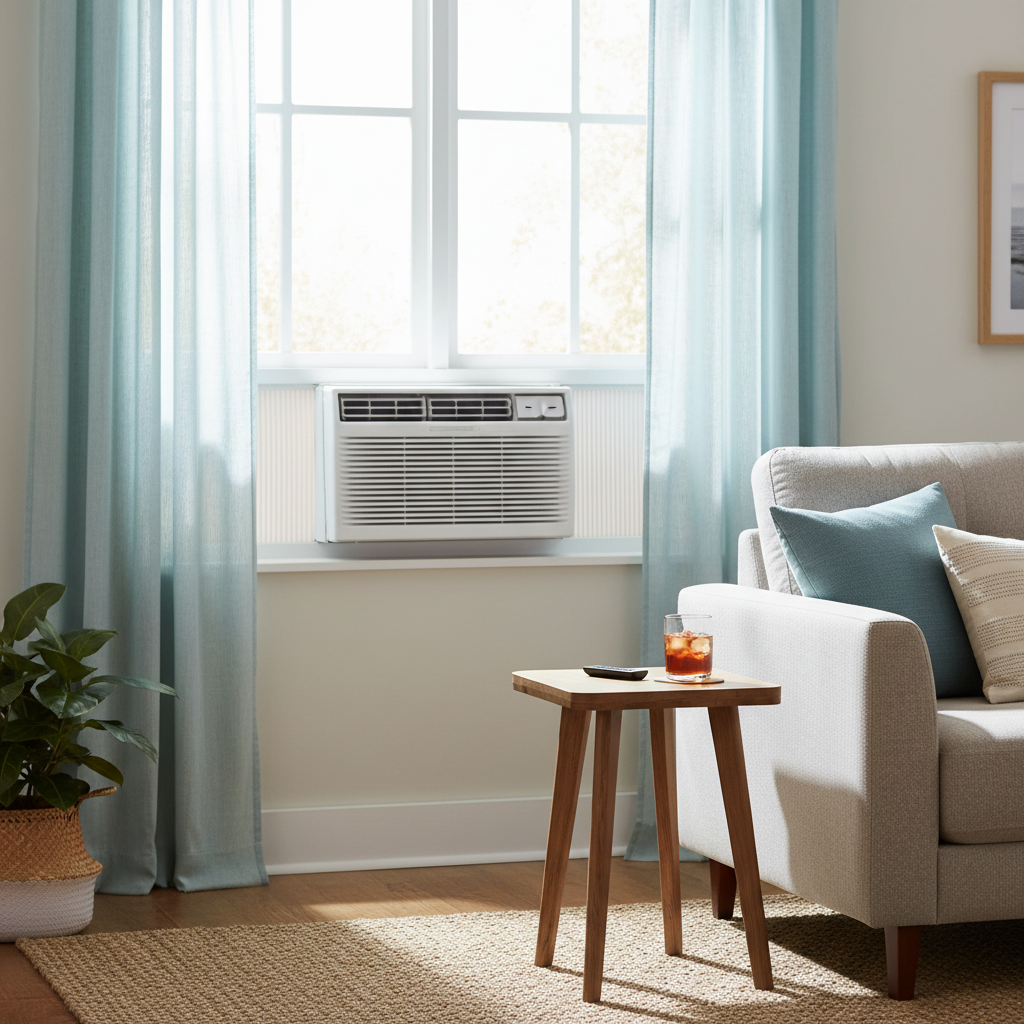
Choosing the right air conditioner size is paramount for achieving a perfectly comfortable indoor environment without wasting energy. Have you ever wondered why some rooms never feel cool enough, or why your AC unit cycles on and off too frequently? Often, the answer lies in understanding British Thermal Units (BTU) and accurately calculating your room’s specific cooling needs. As an HVAC technician with over a decade of hands-on experience, I’ve seen firsthand how crucial it is to match an air conditioner’s capacity to the space it serves. This guide will walk you through the essential factors and a simple step-by-step process to determine the ideal BTU for your room, ensuring efficient operation and lasting comfort.
Understanding British Thermal Units (BTU)
The British Thermal Unit, or BTU, is a fundamental unit of energy measurement in the world of heating and cooling. Specifically, one BTU represents the amount of energy required to raise or lower the temperature of one pound of water by one degree Fahrenheit. In the context of air conditioning, the BTU rating quantifies how much heat an AC unit can remove from a room within one hour.
This measurement is incredibly important because it directly correlates to an air conditioner’s cooling capacity. Historically, BTUs have been a standard benchmark, allowing consumers and professionals alike to compare and select units based on their heat removal capabilities. An accurate BTU calculation is the cornerstone of an efficient cooling system, preventing issues that arise from both undersized and oversized units.
Key Factors Influencing Air Conditioner BTU Requirements
Determining the precise BTU requirement for a room goes beyond a simple square footage estimate. Several critical factors contribute to a room’s heat load, and considering each one is essential for selecting an air conditioner that performs optimally.
Room Size and Layout
|
Our Picks for the Best Air conditioner in 2026
As an Amazon Associate I earn from qualifying purchases.
|
||
| Num | Product | Action |
|---|---|---|
| 1 | Midea 8,000 BTU U Shaped Smart Inverter Window Air Conditioner - Cools 350 Sq Ft, Ultra Quiet with Open Window Flexibility - Alexa/Google Assistant Compatible - 37% Energy Savings, Remote (Updated) |

|
| 2 | Midea 12,000 BTU U-Shaped Smart Inverter Window Air Conditioner–Cools up to 550 Sq. Ft., Ultra Quiet with Open Window Flexibility, Compatible with Alexa/Google Assistant, 35% Energy Savings (Renewed) |
|
| 3 | Amazon Basics 5000-BTU Window Air Conditioner with Quiet Operation, Up to 150 Sqf, Cool and Fan Functions, Washable Filter, Adjustable Window Kit, Intuitive Mechanical Controls, for Small Room, White |
|
| 4 | Midea 5,000 BTU EasyCool Small Window Air Conditioner - Cool up to 150 Sq. Ft. with Easy-to-Use Mechanical Controls and Reusable Filter, Perfect for Small Bedroom, Living Room, Home Office |
|
| 5 | Feelfunn 8,000 BTU Portable Air Conditioner - 3-in-1 Portable AC Unit for Rooms Up to 350 Sq. Ft., with Remote Control, Cooling, Dehumidifier & Fan Modes, AC Unit for Bedroom, Office, Apartment |
|
| 6 | LEVOIT Tower Fan for Bedroom, 90° Oscillating Standing Fan with 28dB Quiet for Sleep, 25ft/s Velocity, 12H Timer, 5 Speeds 4 Modes, Remoter, Bladeless Room Fan for Home, Office, Indoor, 36 inch, White |
|
| 7 | 12000 BTU Portable Air Conditioner, 3-in-1 Portable AC Unit with Cooling, Dehumidifier and Fan Modes, Cools Up to 450 Sq.Ft, LED Display Air Conditioners with Window Kit and Remote Control |
|
| 8 | Frigidaire 5,000 BTU Window-Mounted Air Conditioner, Cools Up to 150 Sq. Ft., Quiet Operation, Effortless Temperature Control, 2 Fan Speeds, Auto Restart, White |
|
| 9 | Amazon Basics 6000-BTU Window Air Conditioner with Quiet Operation, Up to 250 Sqf, Cool and Fan Functions, Washable Filter, Adjustable Window Kit, Digital Temperature Display, Remote Control, White |
|
| 10 | Shinco 8,000 BTU Portable Air Conditioner, AC Unit with Built-in Cool, Dehumidifier & Fan Modes for Room up to 350 sq.ft, Conditioner Remote Control, 24 Hour Timer, Installation Kit |
|
The most significant factor in BTU calculation is the physical size of the room. Larger rooms inherently contain more air volume and surface area, thus requiring a higher cooling capacity. To start, measure the length and width of your room to calculate its square footage. A general rule of thumb suggests approximately 20 BTUs per square foot for cooling purposes. For instance, a 300-square-foot room would typically need around 6,000 BTUs.
Furthermore, rooms with higher ceilings (exceeding 8 feet) have a larger cubic volume of air to cool. As a guideline, you should increase your BTU calculation by about 10% for every foot of ceiling height above 8 feet to account for the additional space.
Climate and Sun Exposure
Your geographical location and the amount of sunlight a room receives significantly impact its heat gain. Homes in hotter climates naturally require higher BTU air conditioners to combat elevated outdoor temperatures. Similarly, a room that receives direct, prolonged sunlight, particularly on south or west-facing walls, will absorb more solar radiation and therefore need a higher BTU capacity—often requiring a 10% increase in the calculated BTU. Conversely, a heavily shaded room might allow for a 10% reduction in BTU requirements, as less energy is needed to maintain comfort.
Number of Occupants and Heat Sources
People are natural heat generators. Each individual in a room contributes to the overall heat load. As a rule, after the first two occupants, you should add approximately 600 BTUs for each additional person who regularly occupies the space.
Beyond human presence, various heat sources within a room can also increase cooling demands. Kitchens, with their ovens, stovetops, and refrigerators, generate substantial heat, often necessitating an additional 4,000 BTUs. Other electronic appliances like televisions, computers, and even lighting fixtures also dissipate heat into the room, further impacting the total BTU requirement.
Insulation and Window Quality
The thermal integrity of a room plays a crucial role in its cooling needs. Well-insulated rooms, boasting high R-values in walls and ceilings, are more effective at preventing heat transfer from the outside, thus requiring fewer BTUs. Conversely, older homes with poor insulation or numerous air leakages will struggle to retain cool air, demanding a higher BTU capacity from the air conditioner.
Windows and doors are common points of heat exchange. Rooms with a large number or size of windows, especially single-paned ones, will experience greater heat gain. Upgrading to double-glazed windows can significantly improve thermal resistance, reducing the necessary BTU load. The direction windows face also matters, as sun-exposed windows contribute more heat.
Room Type and Specific Needs
The intended use of a room can also influence its BTU requirements. For example, specialized spaces like conservatories or attics, which are often exposed to extreme temperatures and lack robust insulation, will typically demand significantly stronger air conditioning units compared to a standard bedroom of similar dimensions. Similarly, rooms with open layouts connected to other areas might have different airflow dynamics that need consideration.
Step-by-Step Guide: Calculating Your Room’s BTU Needs
Accurately calculating your room’s BTU requirement is a systematic process. By following these steps, you can arrive at a more precise figure, leading to greater comfort and energy efficiency.
-
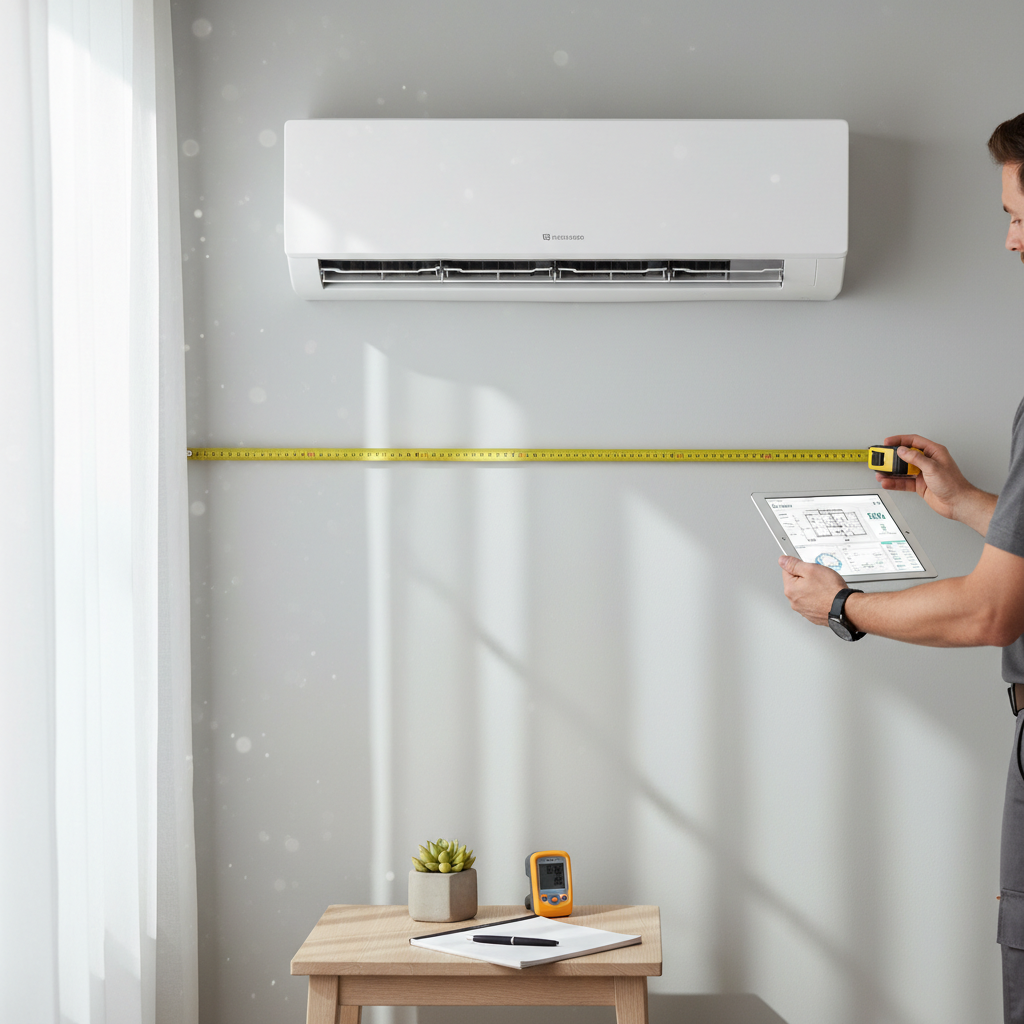
Measure Room Dimensions:
Begin by measuring the length and width of the room in feet.- Example: A room that is 10 feet long and 15 feet wide has a square footage of 150 sq ft (10 ft x 15 ft).
-
Apply Base BTU per Square Foot:
Multiply the square footage by a base factor, typically 20 BTUs per square foot for standard cooling applications.- Example: 150 sq ft x 20 BTU/sq ft = 3,000 BTUs.
-
Adjust for External Factors:
Refine this base number based on the room’s exposure to the elements.- Sun Exposure: If the room is heavily sunny (e.g., south-facing with large windows), increase the BTU by 10%. If it’s heavily shaded, decrease by 10%.
- Climate: In very hot climates, you might start with a slightly higher base BTU/sq ft or add a percentage.
- Example (Sunny Room): 3,000 BTUs + (3,000 BTUs x 0.10) = 3,300 BTUs.
-
Account for Internal Heat Loads:
Consider the heat generated by people and appliances within the room.- Occupants: Add 600 BTUs for each person beyond the first two who regularly occupies the room.
- Appliances: For a kitchen, add approximately 4,000 BTUs. For other rooms with significant electronics (e.g., a home office with multiple computers), consider adding 500-1000 BTUs.
- Example (Two occupants + kitchen): Assuming a living room and kitchen combo is 500 sq ft, base BTU 10,000. Add 600 BTU for the extra person (if 3 people) + 4,000 BTU for the kitchen.
-
Refine based on Room Type and Insulation:
These are qualitative adjustments, but crucial.- Room Type: A conservatory or a loft will typically require a significantly higher BTU capacity than a standard bedroom, even if they have the same square footage, due to greater heat gain.
- Insulation: If your room has poor insulation or many old, single-pane windows, you may need to increase the BTU calculation by an additional 10-15% to compensate for heat loss/gain. Conversely, excellent insulation can allow for a slight reduction.
By systematically applying these adjustments, you move from a basic estimate to a much more accurate BTU requirement for your specific space.
Common Air Conditioner Types and Their Application
While this article focuses on BTU calculation, it’s worth noting how different air conditioner types fit various room needs once you have your BTU figure.
- Window or Portable Units: Ideal for single rooms, offering flexibility and straightforward installation for targeted cooling. Their BTU ratings range widely, making them suitable for small bedrooms to larger living spaces.
- Split Systems (Wall-Mounted): Highly popular for individual rooms or open-plan areas. They offer powerful, quiet operation and come in a broad range of BTU capacities, making them versatile for almost any residential or small commercial space.
- Multi-Split Systems: Allow multiple indoor units to connect to a single outdoor unit, providing independent temperature control for several rooms while optimizing space. This is excellent for multi-room BTU needs.
- Ducted Systems (Central Air Conditioning): Best for cooling an entire home or large office efficiently. The BTU calculation for these systems is more complex, requiring a whole-house load calculation, as they distribute cool air through a network of ducts to multiple zones.
Matching your calculated BTU to the appropriate air conditioner type ensures you get both the right power and the right solution for your space.
Consequences of Incorrect BTU Sizing
Choosing an air conditioner with the wrong BTU capacity can lead to significant issues, impacting both your comfort and your energy bills. It’s a common mistake that savvy homeowners and business owners strive to avoid.
Undersized Units
An air conditioner with too few BTUs for the space will struggle continuously. It will run almost non-stop, attempting to reach the desired temperature but often failing, especially on hot days. This constant operation leads to:
- Higher Energy Bills: The unit consumes more electricity without achieving optimal cooling.
- Inefficient Cooling: The room never feels consistently cool or reaches the set temperature.
- Increased Wear and Tear: Continuous running puts extra strain on the compressor and other components, shortening the unit’s lifespan.
Oversized Units
While it might seem logical to “overbuy” for more power, an air conditioner with too many BTUs for the room presents its own set of problems:
- Short Cycling: The unit cools the room too quickly, reaching the thermostat’s set point and shutting off before it can effectively remove humidity from the air. This rapid on-off cycle wastes energy.
- Poor Dehumidification: Because it doesn’t run long enough, an oversized unit leaves the air feeling damp and clammy, even if the temperature is cool. High humidity can also promote mold growth.
- Uneven Cooling: Areas of the room might be too cold, while others remain warm due to inadequate air circulation during short cycles.
- Increased Wear and Tear: Frequent starting and stopping (short cycling) is more damaging to an AC’s components than steady, longer runs.
The goal is always to find the “just right” BTU capacity to ensure efficient, consistent, and comfortable cooling.
Tips for Efficient Air Conditioner Usage Beyond BTU
Even with a perfectly sized air conditioner, smart usage habits can significantly enhance efficiency and extend your unit’s life. These tips can help you maximize your comfort while minimizing energy consumption.
- Set Appropriate Temperatures: Aim for a comfortable yet energy-efficient temperature, typically between 72-78°F (22-26°C). Avoid drastically lowering the thermostat, as this doesn’t cool the room faster, only makes the unit work harder.
- Utilize Timer Modes: Many modern air conditioners come with programmable timers. Use these to cool your room only when you need it, perhaps turning on an hour before you arrive home and shutting off an hour before you leave for work.
- Regular Cleaning and Maintenance: A dirty air filter restricts airflow and reduces efficiency. Clean or replace filters every 1-3 months. Regularly clean the outdoor condenser coil and ensure it’s free from obstructions like leaves or debris.
- Seal Windows and Doors: Prevent cooled air from escaping by ensuring windows and doors are properly sealed. Use weatherstripping and caulk to block drafts.
- Combine with Fans: Ceiling fans and portable fans can help circulate cooled air more effectively, making a room feel cooler without lowering the thermostat. This can allow you to raise your AC’s temperature setting by a few degrees, saving energy.
- Minimize Heat Sources: During hot periods, try to limit the use of heat-generating appliances like ovens, clothes dryers, and incandescent lights. Close blinds or curtains on sunny windows to block solar gain.
Conclusion
Calculating your air conditioner’s BTU requirements is a critical step towards creating an energy-efficient and comfortable living or working space. By meticulously considering factors such as room size, sun exposure, occupancy, and insulation, you can select an AC unit that delivers optimal performance. Choosing the correct BTU prevents the common pitfalls of both undersized and oversized systems, saving you from higher energy bills, discomfort, and premature equipment wear. Taking the time to accurately assess your needs ensures your air conditioning system provides consistent, effective cooling for years to come. What steps will you take today to ensure your home’s air conditioning is perfectly tailored for comfort and efficiency?
Frequently Asked Questions
What is a British Thermal Unit (BTU) in air conditioning?
A British Thermal Unit (BTU) is a measure of thermal energy. In air conditioning, it quantifies the amount of heat an AC unit can remove from a room within one hour. A higher BTU rating indicates a greater cooling capacity, crucial for effectively cooling larger or warmer spaces.
How does room size impact BTU requirements?
Room size is the primary determinant of BTU requirements. Larger rooms have more air to cool and greater surface areas for heat transfer, necessitating a higher BTU air conditioner. A general guideline is to allocate around 20 BTUs per square foot, with adjustments for ceiling height and other factors.
Should I add extra BTUs for a kitchen or a room with many electronics?
Yes, you should add extra BTUs for kitchens and rooms with numerous electronics. Kitchens, due to appliances like ovens and stovetops, generate significant heat, often requiring an additional 4,000 BTUs. Electronics like computers and TVs also contribute to the heat load, demanding a slight increase in cooling capacity.
What happens if my air conditioner has too many BTUs for my room?
An oversized air conditioner can lead to “short cycling,” where the unit cools the room too quickly and shuts off before it can adequately remove humidity. This results in a damp, clammy feeling, uneven temperatures, increased energy waste from frequent starts, and premature wear on the system components.
How often should I re-evaluate my BTU needs?
You should re-evaluate your BTU needs whenever there are significant changes to your room or home. This includes renovations that alter room size, add new windows, or improve insulation. Also, if the number of regular occupants or major heat-generating appliances changes, re-assessing your BTU calculation is a wise step to maintain optimal comfort and efficiency.