Living in an apartment often brings its own set of challenges, especially when summer heat arrives. Traditional central air conditioning might not be an option, and window units could be prohibited by rental agreements. This is where portable air conditioners step in as a flexible and convenient solution, offering relief without permanent installation. But with numerous models on the market, choosing the right one for your apartment can feel overwhelming. This guide will walk you through everything you need to know, from understanding cooling capacity to essential features, ensuring you find the perfect portable air conditioner to keep your living space comfortably cool.
Understanding Portable Air Conditioners
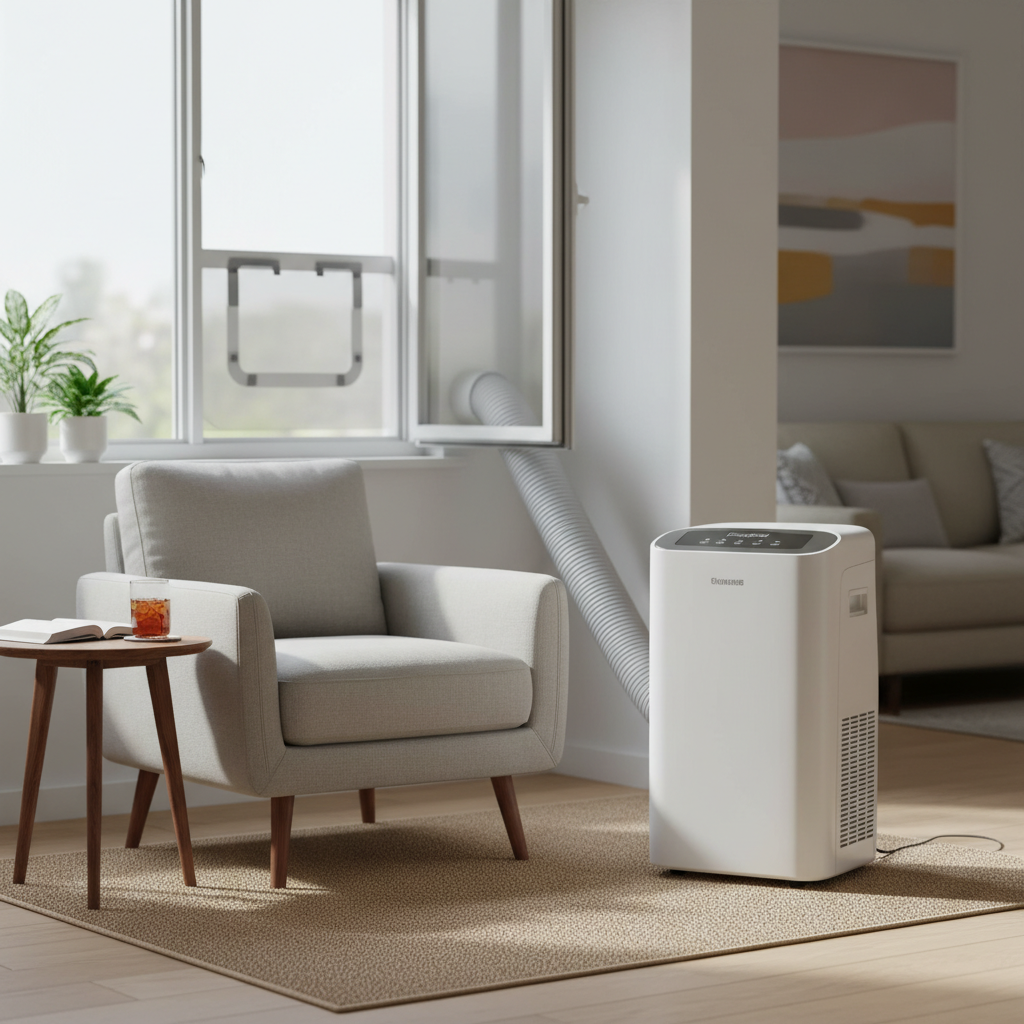
A portable air conditioner is a self-contained unit designed to cool individual rooms or small areas. Unlike central air systems or window units, which require fixed installation, portable ACs sit on the floor and typically feature wheels for easy mobility. They operate by drawing warm, humid air from the room, cooling and dehumidifying it, and then circulating the refreshed air back into the space. The hot air extracted during this process is expelled outside through an exhaust hose, usually vented through a window.
The primary advantage of portable air conditioners for apartment dwellers is their non-permanent nature. They don’t require professional installation, making them ideal for renters who cannot make modifications to their property. Setup is often a matter of minutes, involving connecting the exhaust hose to the unit and securing a window adapter kit. This flexibility also means you can move the unit between rooms as needed, providing targeted cooling wherever you are.
Common Types of Portable Air Conditioners
While the fundamental operation remains similar, portable air conditioners primarily come in two types based on their exhaust systems:
- Single-Hose Units: These are the most common and generally more compact. They draw air from inside the room, use it to cool the condenser coils, and then exhaust the hot air outside. While simpler to install and often more affordable, they create negative pressure, drawing unconditioned air from outside or other rooms back into the space, which can slightly reduce efficiency. For many small apartment users, however, the convenience often outweighs this efficiency trade-off.
- Dual-Hose Units: These units feature two separate hoses. One hose draws outside air to cool the condenser, and the other expels the hot air back outside. This design prevents the creation of negative pressure, making them more efficient at cooling and maintaining consistent room temperatures. However, dual-hose models are typically larger, heavier, and generally more expensive than their single-hose counterparts, and their installation can be slightly more involved due to the two hoses.
|
Our Picks for the Best Air conditioner in 2026
As an Amazon Associate I earn from qualifying purchases.
|
||
| Num | Product | Action |
|---|---|---|
| 1 | Shinco 8,000 BTU Portable Air Conditioner, AC Unit with Built-in Cool, Dehumidifier & Fan Modes for Room up to 350 sq.ft, Conditioner Remote Control, 24 Hour Timer, Installation Kit |

|
| 2 | Midea 5,000 BTU EasyCool Small Window Air Conditioner - Cool up to 150 Sq. Ft. with Easy-to-Use Mechanical Controls and Reusable Filter, Perfect for Small Bedroom, Living Room, Home Office |
|
| 3 | Midea 12,000 BTU U-Shaped Smart Inverter Window Air Conditioner–Cools up to 550 Sq. Ft., Ultra Quiet with Open Window Flexibility, Compatible with Alexa/Google Assistant, 35% Energy Savings (Renewed) |
|
| 4 | 12000 BTU Portable Air Conditioner, 3-in-1 Portable AC Unit with Cooling, Dehumidifier and Fan Modes, Cools Up to 450 Sq.Ft, LED Display Air Conditioners with Window Kit and Remote Control |
|
| 5 | Feelfunn 8,000 BTU Portable Air Conditioner - 3-in-1 Portable AC Unit for Rooms Up to 350 Sq. Ft., with Remote Control, Cooling, Dehumidifier & Fan Modes, AC Unit for Bedroom, Office, Apartment |
|
| 6 | Amazon Basics 6000-BTU Window Air Conditioner with Quiet Operation, Up to 250 Sqf, Cool and Fan Functions, Washable Filter, Adjustable Window Kit, Digital Temperature Display, Remote Control, White |
|
| 7 | Amazon Basics 5000-BTU Window Air Conditioner with Quiet Operation, Up to 150 Sqf, Cool and Fan Functions, Washable Filter, Adjustable Window Kit, Intuitive Mechanical Controls, for Small Room, White |
|
| 8 | LEVOIT Tower Fan for Bedroom, 90° Oscillating Standing Fan with 28dB Quiet for Sleep, 25ft/s Velocity, 12H Timer, 5 Speeds 4 Modes, Remoter, Bladeless Room Fan for Home, Office, Indoor, 36 inch, White |
|
| 9 | Midea 8,000 BTU U Shaped Smart Inverter Window Air Conditioner - Cools 350 Sq Ft, Ultra Quiet with Open Window Flexibility - Alexa/Google Assistant Compatible - 37% Energy Savings, Remote (Updated) |
|
| 10 | Frigidaire 5,000 BTU Window-Mounted Air Conditioner, Cools Up to 150 Sq. Ft., Quiet Operation, Effortless Temperature Control, 2 Fan Speeds, Auto Restart, White |
|
Many portable air conditioners are also multi-functional, offering not just cooling but also fan-only modes for air circulation, dehumidifier modes to tackle humidity, and sometimes even heating capabilities for year-round comfort.
Key Factors When Choosing a Portable Air Conditioner for Your Apartment
Selecting the best portable air conditioner for your apartment involves considering several critical factors to ensure optimal performance and comfort.
Cooling Capacity (BTU)
The cooling capacity of an air conditioner is measured in British Thermal Units (BTU). A higher BTU rating indicates more cooling power. Choosing the correct BTU for your room size is paramount; an undersized unit will struggle to cool the space effectively and run continuously, wasting energy, while an oversized unit will cool too quickly without adequately removing humidity, leading to a clammy feeling and frequent on/off cycling that is less efficient and louder.
Here are general BTU guidelines for typical apartment room sizes:
- Up to 250 sq ft (approx. 23m²): 8,000 BTU
- 250–350 sq ft (approx. 23-32m²): 8,000–10,000 BTU
- 350–450 sq ft (approx. 32-42m²): 10,000 BTU
Remember that these are guidelines. Factors like high ceilings, large windows exposed to direct sunlight, poor insulation, or an open-plan layout will require a slightly higher BTU unit to compensate for increased heat gain. It’s crucial to “right-size” your unit; in smaller rooms, this often means resisting the urge to buy the most powerful model available, as an appropriately sized unit will provide better comfort, lower noise, and easier installation.
Apartment-Friendly Design & Type
For apartments, a compact footprint and easy portability are key. Look for slim designs that won’t take up too much floor space and models equipped with sturdy casters for effortless movement between rooms. As discussed, single-hose units are often preferred in apartments due to their smaller size and simpler setup, even if they are slightly less efficient than dual-hose models.
Technology and Features
Modern portable air conditioners come with a range of technologies and features that enhance comfort and convenience:
- Energy Efficiency: Look for units with an Energy Star rating, which signifies they meet strict guidelines for energy efficiency. While portable ACs generally consume more electricity per cooling output than fixed systems, an efficient model will save you money on utility bills.
- Noise Level: Noise can be particularly intrusive in smaller apartment spaces. Portable air conditioners typically operate between 50 and 65 decibels (dB), which is comparable to a normal conversation. For bedrooms or workspaces where quiet operation is essential, aim for models closer to 45-50 dB. Many units include a “sleep mode” that gradually adjusts temperature and reduces fan speed for quieter operation at night. Placing rubber mats under the unit can also help dampen vibrations and reduce perceived noise.
- Dehumidification Function: Beyond cooling, many units offer a dedicated dehumidifier mode or have a built-in dehumidifier that works alongside cooling. This is especially beneficial in humid climates, as removing excess moisture significantly enhances comfort.
- Smart Features: Remote controls allow you to adjust settings from across the room. Wi-Fi-enabled models offer smart control through smartphone apps, letting you monitor and manage your AC remotely—perfect for pre-cooling your apartment before you arrive home. Programmable timers also help save energy by allowing you to schedule cooling only when needed.
- Self-Evaporation: Some advanced portable ACs feature self-evaporating technology, which recycles the condensate water to cool the condenser coils, then expels most of it with the exhaust air. This significantly reduces how often you need to manually drain the water tank.
- Other Modes: Beyond cooling, consider fan-only modes for air circulation on milder days and oscillating or directional airflow features that help distribute cooled air more evenly throughout the room.
Brand and Price
The market offers portable air conditioners from various reputable brands. Some well-known names include Midea, Whynter, SereneLife, BLACK+DECKER, LG, TOSOT, DeLonghi, Rinnai, Dimplex, and Olimpia Splendid. Prices can vary significantly based on BTU capacity, features, and brand. It’s important to balance your budget with the features and performance that best meet your specific apartment needs.
Comparing Popular Portable Air Conditioner Models for Apartments
When considering models for apartment living, key aspects like BTU, noise level, and included features are paramount. Here’s a generalized comparison focusing on types often favored for smaller spaces:
| Feature/Model Type | Compact & Quiet (e.g., specific BLACK+DECKER or TOSOT 8,000 BTU) | Balanced Performance (e.g., Midea Duo or Whynter ARC-101CW 10,000 BTU) | Value & Quick Cooling (e.g., SereneLife SLPAC10) |
|---|---|---|---|
| Cooling Capacity | 8,000 BTU (DOE) | 10,000 – 12,000 BTU (DOE) | 8,000 – 10,000 BTU (DOE) |
| Ideal Room Size | Bedrooms, dorms, small offices (up to 250 sq ft) | Medium living rooms, studio apartments (250-350 sq ft) | Small to medium rooms (up to 325 sq ft) |
| Hose Type | Single-hose (typically) | Single or Dual-hose | Single-hose |
| Noise Level | Lower end of spectrum (often ~50 dB) | Moderate (50-65 dB), some quieter dual-hose options | Can be on the louder side (e.g., 60-65 dB) |
| Key Features | Compact size, sleep mode, basic remote | Wi-Fi connectivity, self-evaporation, multiple fan speeds, dehumidifier | Fast cooling, simple controls, mobile design |
| Pros for Apartments | Excellent for noise-sensitive areas, minimal footprint | More efficient, versatile for slightly larger open spaces | Cost-effective, good for rapid spot cooling |
| Cons for Apartments | May struggle in larger or very hot rooms | Larger physical size, potentially higher cost | Can be noisy, may lack advanced smart features |
Portable Air Conditioner Buying Guide for Renters
For apartment dwellers, especially renters, the decision-making process for a portable air conditioner often has unique considerations.
Identifying Your Needs
Before you start shopping, clarify your specific requirements:
- Room Size and Layout: Accurately measure the square footage of the room you intend to cool. Consider ceiling height, number of windows, and whether the room is open to other areas.
- Rental Restrictions: Review your lease agreement for any limitations on window modifications or appliance types. Portable ACs are generally renter-friendly as they don’t require permanent alterations.
- Personal Preferences: Think about your priorities. Is quiet operation for sleeping paramount? Do you value smart features and remote control? Is multi-functionality (dehumidifier, heat) important to you?
- Budget: Determine how much you are willing to spend, keeping in mind that higher-BTU units and those with advanced features will typically be more expensive.
Research and Comparison
Once you have a clear idea of your needs, dive into research:
- Read Reviews: Look for reviews specifically from other apartment dwellers or those with small spaces. Pay attention to feedback regarding cooling performance in confined areas, noise levels, and ease of installation.
- Compare Models: Utilize product specifications to compare BTUs, noise ratings, energy efficiency (EER/SACC), and available features across different brands and models.
- Consider Hose Type: For smaller apartments, a single-hose unit might offer sufficient cooling with simpler installation, while a dual-hose unit could be better for larger rooms or if maximum efficiency is desired.
Purchase and Installation
- Reputable Retailers: Purchase your portable AC from reputable appliance stores or online retailers that offer good warranties and customer support.
- Easy Setup: Most portable air conditioners boast easy setup in under 20 minutes, often without tools. Ensure the supplied window kit is compatible with your window type (sliding or sash windows are most common). Hinged windows might require custom solutions.
- Placement: Position the unit near a window and a power outlet. Ensure adequate clearance (typically 12-20 inches) around the air intake and exhaust vents for unrestricted airflow. Keep the exhaust hose as short and straight as possible to maximize efficiency, as excessive length or sharp bends can reduce performance.
Maintenance and Care
Proper maintenance is crucial for the longevity and efficient operation of your portable air conditioner:
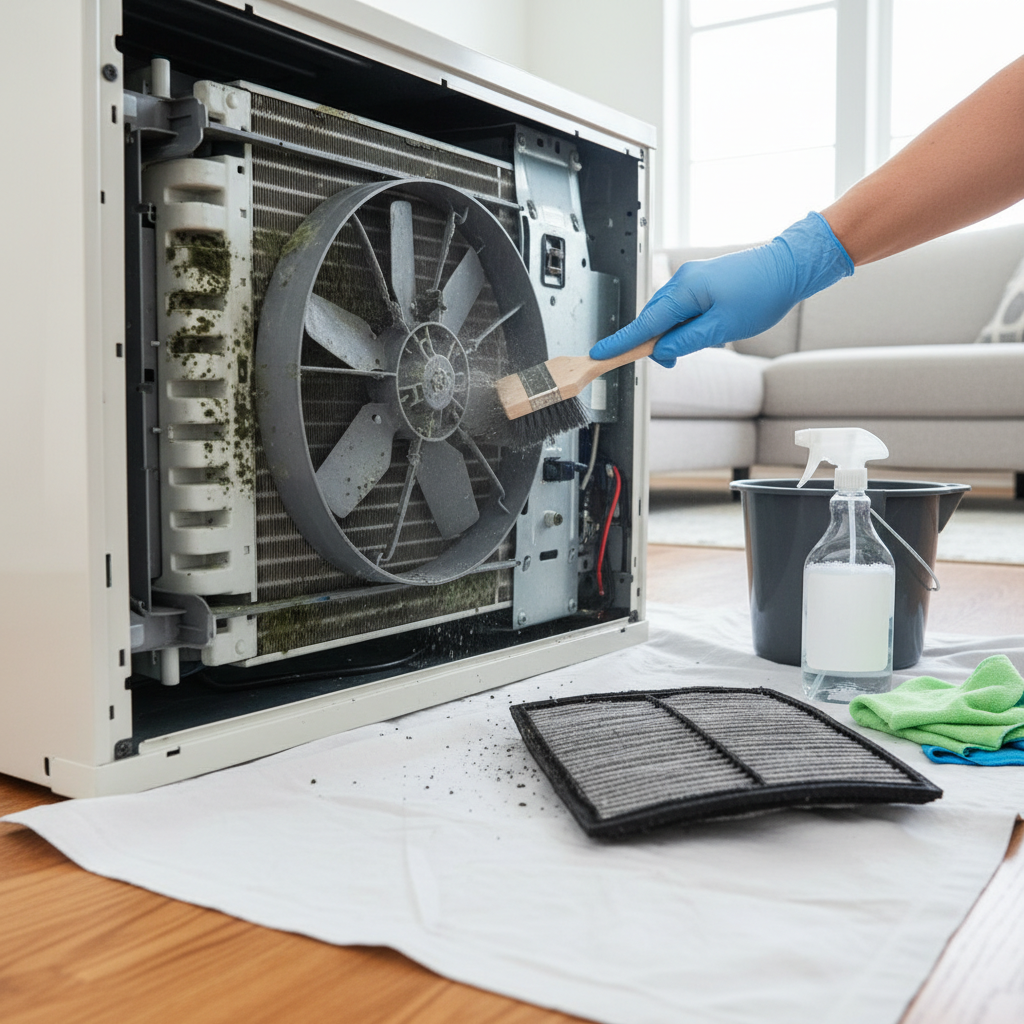
- Regular Filter Cleaning: Clean or replace the air filters every 2-4 weeks during heavy use. Clogged filters reduce airflow and efficiency.
- Drainage: Portable ACs collect condensate water. If your unit doesn’t have a self-evaporating system, you will need to regularly empty the internal collection tank. Some models offer continuous drainage options by connecting a hose to a floor drain or external location.
- Exhaust Hose & Vents: Annually clean the exhaust hose to maintain airflow efficiency. Wipe exterior surfaces and inspect/clean vents and grilles monthly.
- Seasonal Storage: Before storing the unit for winter, drain all condensate water completely to prevent mold growth. Clean the filters and run the unit in fan-only mode for several hours to thoroughly dry internal components. Cover the unit to protect it from dust.
Tips for Energy-Efficient Portable AC Use in Apartments
Maximizing the efficiency of your portable air conditioner can lead to significant energy savings and a more comfortable living environment.
- Correct Sizing: As emphasized, ensure your unit’s BTU rating matches your room size. An appropriately sized unit will cool efficiently without overworking.
- Seal Window Gaps: Critically, ensure that the window kit is properly installed and sealed around the exhaust hose. Even small gaps can allow hot air to infiltrate, drastically reducing cooling efficiency and increasing energy consumption. Use foam insulation or weather stripping to seal any leaks.
- Utilize Programmable Timers: Take advantage of timers to schedule cooling only when you are home or need it most. Pre-cooling before arrival or shutting off after you fall asleep prevents unnecessary operation.
- Set Appropriate Temperatures: Avoid setting the temperature excessively low. Most experts recommend keeping your thermostat around 75-78°F (24-26°C) for optimal comfort and energy savings.
- Combine with Fans: Use ceiling fans or oscillating pedestal fans in conjunction with your portable AC. Fans circulate the cooled air more effectively, allowing you to set the thermostat a few degrees higher without sacrificing comfort.
- Close Doors and Windows: When your portable AC is running, keep all doors and windows to the cooled room closed to prevent cool air from escaping and hot air from entering.
- Block Sunlight: For rooms with windows facing direct sunlight, use blackout blinds or thick curtains to block solar heat gain, reducing the workload on your AC.
Conclusion
Portable air conditioners offer apartment dwellers a highly adaptable and effective solution for staying cool during hot weather, especially where traditional HVAC systems are not feasible. By carefully considering factors such as cooling capacity (BTU), noise levels, energy efficiency, and convenient features, you can select a unit that perfectly matches your living space and lifestyle. Remember the importance of proper sizing, sealing exhaust hose connections, and routine maintenance to ensure your portable air conditioner operates at its peak. With the right choice and smart usage, you can transform your apartment into a comfortable oasis, making those scorching summer days a distant memory.
What steps will you take to find the best portable air conditioner for your apartment?
Câu Hỏi Thường Gặp
How loud are portable air conditioners for apartments?
Portable air conditioners typically operate between 50 and 65 decibels (dB), which is comparable to a normal conversation. For quieter operation, especially in bedrooms, some models are designed to run closer to 45-50 dB. Factors like fan speed and compressor load can influence the noise level, and choosing models with sleep modes can help reduce noise at night.
Can I use a portable AC without a window in an apartment?
Generally, no. Portable air conditioners need to vent hot exhaust air outside to effectively cool a space. This is typically done through a window using a provided window kit. While some alternatives exist (like venting into another room with an open window or a dryer vent), they are usually less effective and not recommended for optimal cooling performance.
Do portable ACs need to be drained frequently?
The frequency of drainage depends on the model and the humidity levels in your apartment. Many modern portable air conditioners feature self-evaporating technology, which significantly reduces the need for manual draining by expelling most of the condensate with the exhaust air. However, in very humid conditions, or with non-self-evaporating units, you may need to empty a collection tank regularly.
Are dual-hose portable ACs better for apartments than single-hose units?
Dual-hose units are generally more efficient at cooling because they draw outside air for cooling their condenser, preventing negative air pressure in the room. This can lead to faster and more consistent cooling. However, they are often larger, heavier, and can be more expensive. For very small apartments, the simpler installation and compact size of a single-hose unit might be more practical and sufficient.
How much electricity do portable ACs use?
Portable air conditioners generally consume more electricity per cooling output compared to fixed installations like split systems. However, their actual electricity usage depends on their BTU rating, energy efficiency (EER/SACC), runtime, and external factors like room insulation and ambient temperature. Choosing an energy-efficient model and practicing smart usage can help mitigate running costs.