Choosing the right air conditioning system for your home is crucial for maintaining comfort and managing energy costs, especially with rising temperatures. With various options available, two popular choices often come to mind: split AC and window AC units. Both systems are designed to cool your living space, but they differ significantly in their operation, efficiency, installation, and overall user experience. Understanding these distinctions is key to making an informed decision that perfectly aligns with your specific needs and preferences. This comprehensive guide delves into a direct comparison, helping you determine which AC unit offers superior cooling and is the ideal solution for your household.
Overview of Air Conditioners
Air conditioners are essential appliances that regulate indoor temperature and humidity, providing a comfortable environment. They work by extracting heat from inside a room and releasing it outdoors, effectively lowering the ambient temperature. The technology behind air conditioning has evolved significantly, leading to various types designed to cater to different spaces and requirements.
The history of air conditioning dates back to the early 20th century, with Willis Carrier inventing the first modern air conditioning system in 1902. Initially, these systems were primarily used in industrial settings to control humidity and temperature for manufacturing processes. Over time, air conditioning became accessible for commercial and residential use, transforming how we live and work in warmer climates. Continuous innovation has introduced more energy-efficient and user-friendly models, making cooling more affordable and environmentally conscious.
Today, the market offers several popular types of air conditioners, each with distinct characteristics. The most common include:
- Window ACs: Self-contained units installed in a window frame or through a wall opening.
- Split ACs (Mini-Splits): Consist of two main units—an indoor unit mounted on a wall or ceiling and an outdoor unit housing the compressor and condenser, connected by refrigerant lines.
- Central Air Conditioners: Systems that cool an entire home through a network of ducts.
- Portable ACs: Mobile units that can be moved from room to room, typically exhausting hot air through a window kit.
- Ductless Multi-Split Systems: Similar to split ACs but with multiple indoor units connected to a single outdoor unit, allowing for zoned cooling.
For many homeowners and renters, the primary decision often boils down to split AC versus window AC, given their widespread use in cooling individual rooms or smaller spaces.
Key Factors to Consider When Buying an Air Conditioner
Selecting the right air conditioner involves evaluating several critical factors beyond just cooling capacity. Your ultimate choice will impact your comfort, energy consumption, and long-term expenses. Paying close attention to these elements ensures you invest in a system that truly meets your expectations.
Capacity (BTU)
|
Our Picks for the Best Air conditioner in 2026
As an Amazon Associate I earn from qualifying purchases.
|
||
| Num | Product | Action |
|---|---|---|
| 1 | Amazon Basics 5000-BTU Window Air Conditioner with Quiet Operation, Up to 150 Sqf, Cool and Fan Functions, Washable Filter, Adjustable Window Kit, Intuitive Mechanical Controls, for Small Room, White |

|
| 2 | Midea 5,000 BTU EasyCool Small Window Air Conditioner - Cool up to 150 Sq. Ft. with Easy-to-Use Mechanical Controls and Reusable Filter, Perfect for Small Bedroom, Living Room, Home Office |
|
| 3 | Midea 8,000 BTU U Shaped Smart Inverter Window Air Conditioner - Cools 350 Sq Ft, Ultra Quiet with Open Window Flexibility - Alexa/Google Assistant Compatible - 37% Energy Savings, Remote (Updated) |
|
| 4 | Amazon Basics 6000-BTU Window Air Conditioner with Quiet Operation, Up to 250 Sqf, Cool and Fan Functions, Washable Filter, Adjustable Window Kit, Digital Temperature Display, Remote Control, White |
|
| 5 | 12000 BTU Portable Air Conditioner, 3-in-1 Portable AC Unit with Cooling, Dehumidifier and Fan Modes, Cools Up to 450 Sq.Ft, LED Display Air Conditioners with Window Kit and Remote Control |
|
| 6 | LEVOIT Tower Fan for Bedroom, 90° Oscillating Standing Fan with 28dB Quiet for Sleep, 25ft/s Velocity, 12H Timer, 5 Speeds 4 Modes, Remoter, Bladeless Room Fan for Home, Office, Indoor, 36 inch, White |
|
| 7 | Feelfunn 8,000 BTU Portable Air Conditioner - 3-in-1 Portable AC Unit for Rooms Up to 350 Sq. Ft., with Remote Control, Cooling, Dehumidifier & Fan Modes, AC Unit for Bedroom, Office, Apartment |
|
| 8 | Frigidaire 5,000 BTU Window-Mounted Air Conditioner, Cools Up to 150 Sq. Ft., Quiet Operation, Effortless Temperature Control, 2 Fan Speeds, Auto Restart, White |
|
| 9 | Shinco 8,000 BTU Portable Air Conditioner, AC Unit with Built-in Cool, Dehumidifier & Fan Modes for Room up to 350 sq.ft, Conditioner Remote Control, 24 Hour Timer, Installation Kit |
|
| 10 | Midea 12,000 BTU U-Shaped Smart Inverter Window Air Conditioner–Cools up to 550 Sq. Ft., Ultra Quiet with Open Window Flexibility, Compatible with Alexa/Google Assistant, 35% Energy Savings (Renewed) |
|
British Thermal Unit (BTU) is the universal measure of an air conditioner’s cooling power. Understanding BTU is fundamental because an appropriately sized unit is crucial for efficient and effective cooling.
A BTU represents the amount of heat an AC unit can remove from a room per hour. Choosing the right BTU ensures your AC cools effectively without wasting energy. If an AC unit is too small, it will run continuously without adequately cooling the space, leading to higher energy bills and increased wear. Conversely, an oversized unit will cool the room too quickly, cycling on and off frequently. This short-cycling wastes energy, prevents proper dehumidification, and can create an uncomfortable, clammy environment.
To calculate the appropriate BTU for your room, a common guideline is to estimate 20-25 BTUs per square foot of living space. For example, a 150-square-foot room typically requires a 3,000-3,750 BTU unit. However, this is a basic estimate. Factors such as ceiling height, insulation quality, direct sunlight exposure, the number of occupants, and heat-generating appliances in the room can all influence the precise BTU requirement. It is often recommended to consult a professional or use online BTU calculators that account for these variables for a more accurate assessment. Selecting the correct capacity is the first step toward optimal cooling and energy savings.
Type of Air Conditioner
The choice between a split AC and a window AC hinges on your specific space, installation possibilities, and aesthetic preferences. Each type offers distinct advantages and disadvantages.
Window Air Conditioners
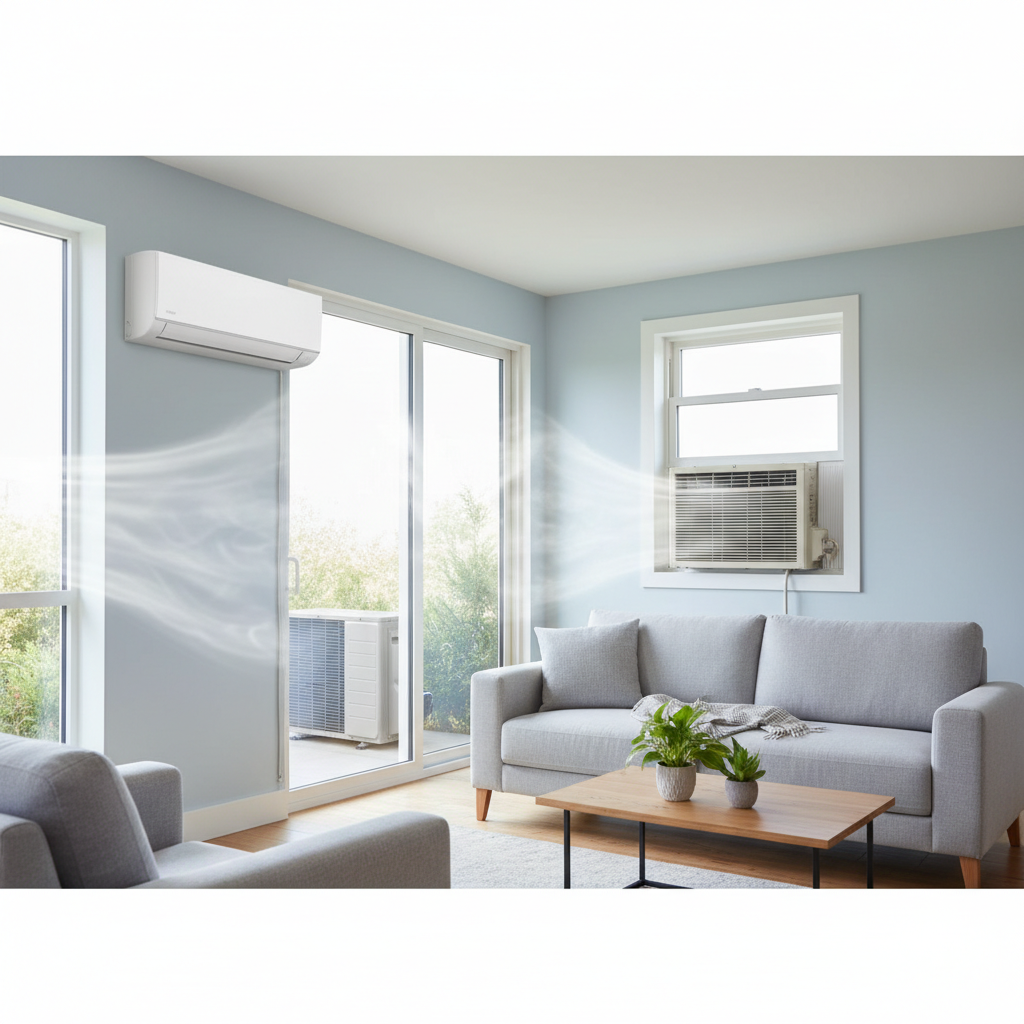
Window ACs are single, self-contained units that house all components—compressor, condenser, evaporator, and fan—within one casing. They are designed to fit into a window frame or a custom wall opening, with part of the unit extending outside to dissipate heat.
- Pros: Generally lower upfront cost, easier to install (often a DIY task), and highly suitable for cooling single, small to medium-sized rooms. They are ideal for temporary solutions or rental properties.
- Cons: Can be noisy due to all components being indoors, often obstruct a portion of the window view, and may be less aesthetically pleasing. Their cooling capacity is usually lower, and energy efficiency can be less than modern split systems.
Split Air Conditioners (Mini-Splits)
Split ACs consist of two main parts: an indoor unit mounted on a wall or ceiling, and an outdoor unit placed outside the building. The two units are connected by refrigerant lines and electrical wiring.
- Pros: Offer superior cooling capacity, making them suitable for larger rooms or multiple zones (with multi-split systems). They operate much quieter indoors as the noisy compressor is located outside. Their sleek design is more aesthetically appealing and does not block windows. Many models include advanced features and higher energy efficiency.
- Cons: Higher initial cost, require professional installation (drilling through walls, handling refrigerants), and the indoor unit is permanently visible.
Choosing the right type depends on whether you prioritize lower initial cost and ease of installation for smaller spaces (window AC) or superior cooling, quiet operation, and aesthetics for larger, permanent applications (split AC).
Technology and Features
Modern air conditioners come equipped with a variety of technologies and features that enhance performance, energy efficiency, and user convenience. Understanding these can significantly impact your satisfaction and operating costs.
Energy-Saving Technologies
The most impactful energy-saving technology is Inverter Technology. Unlike traditional ACs that operate with a fixed-speed compressor that constantly cycles on and off, inverter ACs use a variable-speed compressor. This compressor adjusts its speed based on the cooling demand, running at lower speeds once the desired temperature is reached to maintain it precisely. This continuous, modulated operation significantly reduces energy consumption, leading to lower electricity bills. Inverter technology also contributes to more consistent temperatures, faster cooling, and quieter operation. Many modern split ACs incorporate inverter technology, making them highly efficient.
Other features that contribute to energy savings include:
- Eco Mode: A setting that optimizes the compressor and fan speed for reduced power consumption.
- Sleep Mode: Gradually increases the temperature overnight to save energy while you sleep.
- Timer Functions: Allow you to program the AC to turn on or off at specific times, preventing unnecessary operation.
Additional Features
Beyond basic cooling, many air conditioners offer supplementary features:
- Air Filtration Systems: Advanced filters (like HEPA, activated carbon, or electrostatic filters) remove dust, allergens, pollutants, and odors, improving indoor air quality.
- Ionizers: Release negative ions into the air to neutralize airborne particles and refresh the room.
- Dehumidification Mode: Specifically designed to remove excess moisture from the air, providing comfort even without significant temperature reduction.
- Smart Features/Wi-Fi Connectivity: Allow remote control via smartphone apps, integration with smart home systems, and voice commands.
- Multi-directional Airflow: Louvers that automatically adjust to distribute air more evenly throughout the room.
- Self-Cleaning Function: Helps prevent mold and bacteria buildup on the evaporator coils.
When assessing features, consider which ones genuinely add value to your lifestyle. While advanced filtration is beneficial for allergy sufferers, smart connectivity might appeal to tech-savvy users seeking convenience. Balance innovative features with their impact on overall cost and maintenance.
Brand and Price
The market for air conditioners is vast, with numerous brands offering a wide range of models and price points. Navigating these options requires research to find a reputable brand that fits your budget without compromising quality.
Reputable Air Conditioner Brands
Several brands have established themselves as leaders in the air conditioning industry, known for their reliability, innovation, and customer support. These often include:
- Daikin
- Mitsubishi Electric
- LG
- Samsung
- Panasonic
- Carrier
- Voltas (in specific regions)
These brands typically offer a spectrum of models, from basic window units to high-end inverter split systems. Reputable brands often provide better warranties and easier access to service and spare parts.
Price Comparison
The price of an air conditioner can vary significantly based on its type, capacity, technology, and brand.
- Window AC units are generally the most affordable upfront, ranging from a few hundred dollars to over a thousand, depending on BTU and features.
- Split AC systems typically have a higher initial purchase price, often starting from around $700-$1,000 for a basic model and going up to several thousand for multi-split or high-capacity units.
- Installation costs for split ACs must also be factored in, as professional installation can add a substantial amount ($300-$1,500+) to the total investment, while window AC installation is often minimal or free if DIY.
When comparing prices, it’s crucial to consider the long-term running costs. A cheaper window unit might have higher electricity consumption, leading to greater overall expenses over its lifespan compared to a more expensive, but highly energy-efficient, inverter split AC. Evaluate the total cost of ownership, including purchase price, installation, and estimated energy consumption, to make a truly economical choice.
Comparing Popular AC Models: Split AC vs. Window AC
To help visualize the differences, here’s a comparative overview of typical Split AC and Window AC characteristics. This table highlights how each system performs across key criteria, assisting you in identifying which aspects are most important for your cooling needs.
| Feature | Split AC (Mini-Split) | Window AC |
|---|---|---|
| Cooling Capacity | Higher (0.8-3 tons), suitable for larger rooms/zones, faster cooling | Lower (0.75-2.5 tons), ideal for small to medium rooms, uneven cooling in large spaces |
| Energy Efficiency | Generally higher (especially Inverter models), lower running costs | Generally lower (fixed speed compressors), higher running costs |
| Initial Cost | Higher purchase price | Lower purchase price |
| Installation Cost | Requires professional installation, higher cost | Easier, often DIY, minimal installation cost |
| Noise Level | Very quiet indoors (compressor outside) | Noisier indoors (all components in one unit) |
| Aesthetics | Sleek, wall-mounted indoor unit, doesn’t obstruct windows | Blocks window view, bulkier appearance |
| Maintenance | Requires regular professional checks | Simpler, often DIY filter cleaning |
| Lifespan | Tends to have a longer operational life | Shorter average lifespan |
| Flexibility | Multi-zone cooling possible, flexible indoor unit placement | Limited to window/wall opening, single-room cooling |
| Air Quality | Often includes advanced filtration options | Basic air filtration |
Overall Assessment and Recommendations
From a cooling effectiveness standpoint, split ACs generally cool better for larger areas and offer more consistent temperature control. Their design allows for wider air distribution, and modern inverter technology ensures precise cooling with less fluctuation. Window ACs are effective for their intended use in smaller, confined spaces, providing direct cooling where needed.
- Choose a Split AC if: You need to cool a larger room or multiple rooms, prioritize quiet operation, value aesthetics, and are looking for a long-term, energy-efficient solution with lower running costs, despite a higher initial investment and professional installation requirement.
- Choose a Window AC if: You need an affordable, easy-to-install solution for a small room, are on a tight budget, or require a temporary cooling option without structural modifications. You should be prepared to tolerate more noise and potentially higher electricity bills.
The “better” unit truly depends on aligning the system’s capabilities with your specific living situation and priorities.
Air Conditioner Buying Guide
Purchasing an air conditioner is a significant investment in your home comfort. A structured approach can help you make a confident decision that you won’t regret.
Determine Your Usage Needs
Before diving into models and brands, clearly define what you need from an AC. This initial step is crucial for narrowing down your options.
- Room Size: Measure the length and width of the room(s) you intend to cool to calculate the square footage. This will directly inform the BTU capacity you need. Remember to account for ceiling height, as taller rooms require more cooling power.
- Occupancy: Consider how many people typically occupy the room. More people generate more body heat, necessitating a higher BTU.
- Frequency of Use: Will the AC run continuously throughout the day, or only for a few hours in the evening? For frequent use, energy efficiency (like inverter technology) becomes a paramount consideration for long-term savings.
- Specific Cooling Requirements: Do you need intense cooling in a very hot climate, or just a gentle breeze? Are there specific areas in your home that get unusually hot?
Research and Compare
Once your needs are clear, it’s time to explore the market. Thorough research is your best friend in this phase.
- Gather Information: Look up different types of ACs (split, window, portable) and their general features. Pay attention to their core technologies, especially inverter vs. non-inverter.
- Compare Models and Brands: Create a shortlist of models that match your BTU requirements and preferred type. Compare their energy efficiency ratings (EER/SEER), noise levels (dB), special features (filters, smart control), and warranty periods. Look at well-known brands that have a reputation for reliability.
- Read Reviews: User reviews and expert ratings can offer invaluable real-world insights into a product’s performance, durability, and customer satisfaction. Be mindful of overly negative or positive reviews and look for recurring themes.
Selection and Purchase
With your research complete, you’re ready to make your purchase. This step requires careful attention to detail.
- Visit Stores: If possible, go to a physical store to see the units firsthand. You can assess their actual size, build quality, and even listen to their operational noise (for window units). Discuss your needs with sales professionals, but also rely on your own research.
- Verify Supplier Reputation: Purchase from authorized dealers or reputable retailers to ensure you get genuine products, valid warranties, and reliable after-sales service.
- Check Product Thoroughly: Before finalizing payment or accepting delivery, inspect the unit for any visible damage or missing components. Ensure all documentation, including the warranty card and user manual, is included.
Installation and Maintenance
The life and efficiency of your AC unit heavily depend on proper installation and regular upkeep.
- Professional Installation: For split ACs, always opt for a certified and experienced installation team. Incorrect installation can lead to efficiency losses, refrigerant leaks, and voided warranties. Ensure they follow all safety standards.
- Follow User Manual: Read the user manual carefully for specific operating instructions and recommended maintenance schedules for your model.
- Regular Cleaning: Clean or replace air filters every 2-4 weeks during peak usage. Dirty filters restrict airflow, reduce efficiency, and can compromise indoor air quality.
- Scheduled Servicing: Arrange for annual professional servicing to check refrigerant levels, clean coils, inspect electrical components, and ensure the system is running optimally. This prolongs the unit’s lifespan and maintains efficiency.
Tips for Energy-Saving Air Conditioner Use
Even with the most energy-efficient unit, how you use your air conditioner plays a significant role in your electricity consumption. Adopt these habits to keep your cooling costs down.
- Set the Right Temperature: Aim for a comfortable yet energy-conscious temperature, typically between 75°F (24°C) and 78°F (26°C). Avoid setting the thermostat too low, as each degree increase can reduce energy consumption by a noticeable percentage.
- Utilize Timer and Sleep Modes: Program your AC to turn off when you’re away or to operate at a higher temperature setting while you sleep. Sleep modes often automatically adjust the temperature to be slightly warmer overnight, saving energy without sacrificing comfort.
- Regular Cleaning and Maintenance: As mentioned, clean or replace air filters frequently. Dirty filters make the unit work harder. Schedule annual professional servicing to ensure all components are functioning efficiently.
- Seal Your Space: Keep windows and doors closed when the AC is running to prevent cooled air from escaping and warm air from entering. Use weatherstripping and seal cracks around windows and doors.
- Combine with Fans: Ceiling or portable fans can help circulate cool air more effectively, allowing you to set your thermostat a few degrees higher without feeling warmer. Fans create a wind-chill effect on your skin, enhancing comfort at a fraction of the AC’s energy cost.
- Minimize Heat Sources: Close blinds and curtains during the hottest parts of the day to block direct sunlight. Avoid using heat-generating appliances like ovens or dryers during peak cooling hours.
Conclusion
Deciding between a split AC and a window AC unit ultimately comes down to a careful evaluation of your specific needs, budget, and living situation. While window ACs offer an economical and straightforward solution for cooling smaller, individual rooms with minimal installation hassle, they often come with trade-offs in noise, aesthetics, and energy efficiency. Split ACs, on the other hand, provide superior cooling performance, quiet operation, enhanced energy efficiency (especially with inverter technology), and a more integrated aesthetic for larger spaces, though at a higher initial cost and with the requirement for professional installation.
The ultimate goal is to find an air conditioning solution that delivers optimal comfort while being mindful of your energy consumption and long-term investment. By considering factors such as BTU capacity, installation requirements, running costs, noise levels, and advanced features, you can confidently select the air conditioner that best cools your space and suits your lifestyle. Which factors will weigh most heavily in your decision for a cooler, more comfortable home?
Frequently Asked Questions
Which AC unit is generally more energy-efficient, Split AC or Window AC?
Split ACs, particularly those with inverter technology, are generally more energy-efficient than window ACs. Their variable-speed compressors adjust cooling output to match demand, leading to lower power consumption and reduced electricity bills over time.
Is a Split AC really quieter than a Window AC?
Yes, a Split AC is significantly quieter indoors compared to a Window AC. This is because the compressor, the primary source of noise, is located in the outdoor unit of a split system, while all components are housed within the indoor unit of a window AC.
How do I determine the right BTU capacity for my room?
To determine the right BTU capacity, measure your room’s square footage (length x width). A common guideline is 20-25 BTUs per square foot. Factors like ceiling height, sunlight exposure, and the number of occupants also influence the exact requirement.
Can I install a Split AC myself?
No, Split ACs require professional installation. This involves drilling through walls for refrigerant lines, proper electrical wiring, and charging the system with refrigerant, all of which should be handled by a certified HVAC technician to ensure safety and optimal performance.
Do Window ACs obstruct my view or light?
Yes, Window AC units are installed directly in a window opening, which means they will partially or fully obstruct your view and block natural light from entering the room. This is one of their main aesthetic drawbacks.