Is your air conditioner struggling to keep your home cool, or are you noticing a suspicious spike in your energy bills? Often, the culprit is a simple yet overlooked component: your AC filter. Regularly cleaning your air conditioner’s filters is one of the easiest and most effective ways to boost your unit’s efficiency, save money, and improve the air you breathe. This comprehensive guide will walk you through everything you need to know, from understanding different filter types to a step-by-step cleaning process and the significant benefits you’ll reap.
Understanding Your AC Filters
Air conditioner filters are the unsung heroes of your home’s HVAC system. Their primary job is to trap airborne particles like dust, pollen, pet dander, and other contaminants before they can circulate throughout your home or, worse, build up inside your AC unit. This dual function ensures cleaner indoor air and protects delicate internal components, such as the evaporator coil, from damage.
When an AC filter becomes clogged with dirt and debris, it restricts airflow. This forces your air conditioner to work much harder to pull air through the system, increasing its energy consumption. Think of it like trying to breathe through a stuffed-up nose – your body has to exert more effort. For your AC, this extra effort translates directly to higher utility bills and diminished cooling performance. A dirty filter makes your unit less effective at cooling, leading to longer run times and unnecessary strain on the motor and other vital parts.
Types of AC Filters: Know Before You Clean
Before you begin cleaning, it’s crucial to identify the type of filter your AC unit uses, as cleaning methods can vary significantly. Some filters are designed to be cleaned, while others must be replaced.
- Disposable Filters (Fiberglass/Polyester): These are typically the most common and economical filters. Made from spun fiberglass or polyester, they are designed to trap larger particles like dust and lint. Disposable filters are not meant to be washed. Attempting to clean them with water can damage their structure, reduce their effectiveness, and even lead to mold growth. These should be replaced as recommended by the manufacturer, usually every 30-90 days depending on usage and environmental factors.
- Reusable/Washable Filters (Pleated, Electrostatic): These filters are a more eco-friendly and cost-effective long-term option. They are designed for repeated cleaning and typically last for several years with proper maintenance.
- Pleated filters often have a larger surface area, allowing them to capture more and smaller particles, improving air quality.
- Electrostatic filters use self-charging fibers to attract and hold onto particles, offering good efficiency and often being washable.
- HEPA Filters: High-Efficiency Particulate Air (HEPA) filters are known for trapping a very high percentage of airborne allergens and pollutants. While excellent for air quality, most HEPA filters are designed for replacement, not cleaning, and are often found in specialized air purifiers or certain HVAC systems.
Always consult your air conditioner’s owner’s manual or the filter’s packaging to confirm whether your specific filter is washable or needs to be replaced.
Step-by-Step Guide: Cleaning Your Reusable AC Filters
Cleaning your reusable AC filter is a straightforward task that requires minimal tools and time. Here’s how to do it effectively:
1. Gather Your Supplies
You’ll need:
- A vacuum cleaner with a brush attachment
- A sink or bathtub (or an outdoor hose for larger filters)
- Mild dish soap or a 1:1 mixture of white vinegar and warm water (for deeper cleaning)
- A soft brush or your hands
- A clean towel or a well-ventilated area for drying
|
Our Picks for the Best Air conditioner in 2026
As an Amazon Associate I earn from qualifying purchases.
|
||
| Num | Product | Action |
|---|---|---|
| 1 | Midea 12,000 BTU U-Shaped Smart Inverter Window Air Conditioner–Cools up to 550 Sq. Ft., Ultra Quiet with Open Window Flexibility, Compatible with Alexa/Google Assistant, 35% Energy Savings (Renewed) |

|
| 2 | Shinco 8,000 BTU Portable Air Conditioner, AC Unit with Built-in Cool, Dehumidifier & Fan Modes for Room up to 350 sq.ft, Conditioner Remote Control, 24 Hour Timer, Installation Kit |
|
| 3 | 12000 BTU Portable Air Conditioner, 3-in-1 Portable AC Unit with Cooling, Dehumidifier and Fan Modes, Cools Up to 450 Sq.Ft, LED Display Air Conditioners with Window Kit and Remote Control |
|
| 4 | Amazon Basics 5000-BTU Window Air Conditioner with Quiet Operation, Up to 150 Sqf, Cool and Fan Functions, Washable Filter, Adjustable Window Kit, Intuitive Mechanical Controls, for Small Room, White |
|
| 5 | Midea 5,000 BTU EasyCool Small Window Air Conditioner - Cool up to 150 Sq. Ft. with Easy-to-Use Mechanical Controls and Reusable Filter, Perfect for Small Bedroom, Living Room, Home Office |
|
| 6 | Amazon Basics 6000-BTU Window Air Conditioner with Quiet Operation, Up to 250 Sqf, Cool and Fan Functions, Washable Filter, Adjustable Window Kit, Digital Temperature Display, Remote Control, White |
|
| 7 | Feelfunn 8,000 BTU Portable Air Conditioner - 3-in-1 Portable AC Unit for Rooms Up to 350 Sq. Ft., with Remote Control, Cooling, Dehumidifier & Fan Modes, AC Unit for Bedroom, Office, Apartment |
|
| 8 | LEVOIT Tower Fan for Bedroom, 90° Oscillating Standing Fan with 28dB Quiet for Sleep, 25ft/s Velocity, 12H Timer, 5 Speeds 4 Modes, Remoter, Bladeless Room Fan for Home, Office, Indoor, 36 inch, White |
|
| 9 | Frigidaire 5,000 BTU Window-Mounted Air Conditioner, Cools Up to 150 Sq. Ft., Quiet Operation, Effortless Temperature Control, 2 Fan Speeds, Auto Restart, White |
|
| 10 | Midea 8,000 BTU U Shaped Smart Inverter Window Air Conditioner - Cools 350 Sq Ft, Ultra Quiet with Open Window Flexibility - Alexa/Google Assistant Compatible - 37% Energy Savings, Remote (Updated) |
|
2. Safety First: Turn Off the Power
Always prioritize safety. Before touching any part of your AC unit, locate its power switch (usually on the unit itself or at your home’s electrical panel) and turn off the power completely. This prevents accidental startup and ensures your safety during the cleaning process.
3. Locate and Remove the Filter
The filter’s location varies by AC type. For window units or mini-splits, it’s typically behind the front panel. For central HVAC systems, it might be in a dedicated slot near the air handler or furnace. Carefully slide or unclip the filter to remove it, taking care not to dislodge excess dust onto your floors.
4. Initial Dust Removal
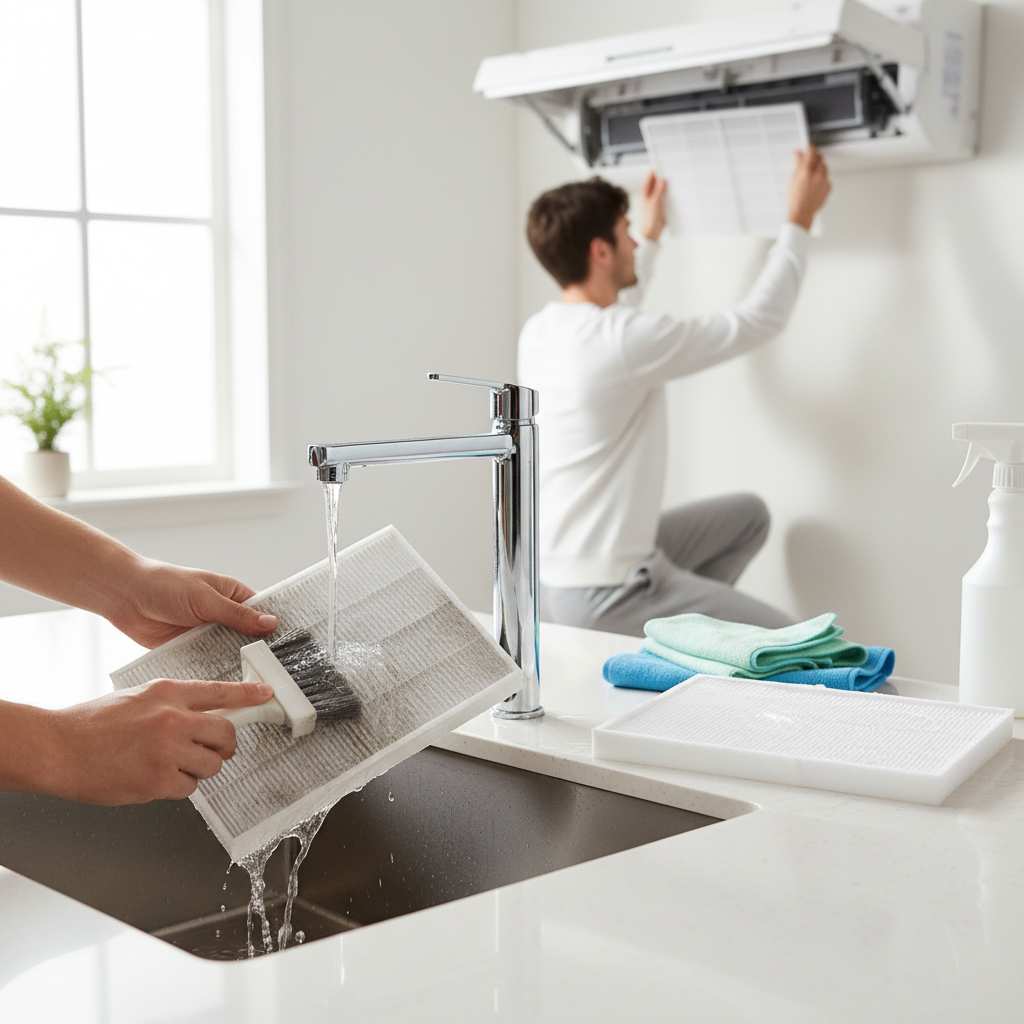
For filters with loose dust or mild buildup, use a vacuum cleaner with a brush attachment to gently remove as much surface dust and debris as possible. This step is particularly effective for removing larger particles before washing.
5. Washing the Filter for a Deeper Clean
If your filter is washable and has more stubborn dirt, proceed with washing:
- Rinse: Hold the filter under lukewarm running water. Start from the clean side and rinse towards the dirty side to push contaminants out.
- Soak (Optional): For a deeper clean, fill a basin or sink with warm water and a few drops of mild dish soap, or a 1:1 solution of warm water and white vinegar. Let the filter soak for 10-60 minutes, gently agitating the water to loosen embedded dirt.
- Gentle Scrub: Use your hands or a soft brush to gently rub away any remaining grime. Avoid using abrasive sponges or stiff brushes, which can damage the filter’s delicate mesh or liner.
- Final Rinse: Rinse the filter thoroughly under running water until all soap residue and loosened dirt are gone. If using an outdoor hose for larger filters, use a low-pressure setting to prevent damage.
6. Thorough Drying
This is a critical step. Allow the filter to air dry completely in a well-ventilated area. This typically takes 20-30 minutes, but it’s essential to ensure there is no moisture left. Reinstalling a damp filter can lead to mold or mildew growth, which can then spread harmful spores throughout your home’s air system. Do not use heat to dry the filter, as it can warp or damage the material.
7. Reinstall the Dry Filter
Once the filter is thoroughly dry, carefully slide it back into its designated slot in the AC unit. Ensure it fits securely and all edges are properly aligned to prevent air bypass.
8. Power On Your AC
With the clean and dry filter securely in place, you can now restore power to your air conditioner. You should notice improved airflow and a unit that runs more smoothly and efficiently.
How Often Should You Clean Your AC Filters?
The frequency of cleaning or replacing your AC filters depends on several factors within your home environment. While it’s always best to refer to your manufacturer’s recommendations, here are some general guidelines:
- Standard Homes (without pets or allergies): Inspect your filter monthly and clean or replace it every 90 days (3 months).
- Homes with Pets or in Dusty Environments: If you have furry friends, live near construction, or in a particularly dusty area, you should inspect your filter monthly and clean or replace it every 30-60 days. Pet dander and increased dust can clog filters much faster.
- Homes with Allergy Sufferers: For individuals with allergies or respiratory issues, more frequent cleaning (every 30 days) can significantly improve indoor air quality and alleviate symptoms.
- Rarely Used Systems: If your AC unit is in a rarely used guest room or a single-occupant home without pets or allergies, an annual cleaning might suffice, but monthly checks during peak usage are still wise.
Some modern AC units even feature smart reminders, alerting you when it’s time to check or clean your filters, taking the guesswork out of maintenance.
The Tangible Benefits of Clean AC Filters
Maintaining clean AC filters offers a multitude of benefits, directly impacting your comfort, health, and wallet.
Significant Energy Savings
A clean filter allows your AC unit to operate with optimal airflow, reducing the effort required to cool your home. Studies indicate that a clean filter can lower your air conditioner’s energy consumption by 5% to 15%. This translates directly into noticeable savings on your monthly electricity bills.
Improved Indoor Air Quality
Your AC filter acts as a barrier against dust, pollen, pet dander, and other airborne particles. A clean filter efficiently traps these contaminants, preventing them from circulating throughout your living space. This results in cleaner, healthier air, which is especially beneficial for individuals with allergies, asthma, or other respiratory sensitivities.
Extended AC Unit Lifespan
When your filter is clogged, your AC system is under constant strain. This increased workload can lead to premature wear and tear on crucial components like the compressor and fan motor. Regular filter maintenance alleviates this stress, helping your unit run more smoothly and extending its overall lifespan, saving you from costly repairs or early replacement.
Consistent Cooling Performance
A clean filter ensures an unrestricted flow of air, allowing your AC system to distribute cool air evenly and efficiently throughout your home. This eliminates hot spots and ensures consistent, comfortable temperatures in every room, making your cooling system more effective.
Reduced Maintenance Costs
By preventing debris buildup within your AC system, you reduce the likelihood of malfunctions and breakdowns. This proactive approach to maintenance can significantly cut down on unexpected repair costs and professional service calls, saving you money in the long run.
“A well-maintained AC filter is the simplest yet most impactful step homeowners can take to boost efficiency and ensure peak performance from their cooling system.” – Johnathan Davies, HVAC Systems Engineer
Beyond the Filter: Other Energy-Saving AC Tips
While cleaning your AC filters is paramount, there are other practices you can adopt to further enhance your system’s energy efficiency and overall performance:
- Keep Your Outdoor Unit Clear: Ensure the area around your outdoor condenser unit is free from leaves, dirt, grass clippings, and other debris. Proper airflow around the unit is crucial for dissipating heat, preventing overheating, and maintaining efficiency.
- Schedule Professional HVAC Inspections: An annual professional tune-up can catch minor issues before they escalate into major problems. Technicians can check refrigerant levels, electrical connections, and overall system health, optimizing performance and identifying potential energy drains.
- Set Your Thermostat Wisely: Maintain a comfortable yet energy-efficient temperature. During warmer months, setting your thermostat to 78°F (25-26°C) when you’re home and higher when you’re away can significantly reduce energy consumption without sacrificing comfort. Consider using a programmable or smart thermostat to automate temperature adjustments.
- Utilize Your Ceiling Fans: Ceiling fans can make a room feel 4-7 degrees cooler, allowing you to set your thermostat a bit higher without feeling uncomfortable. Remember to turn fans off when you leave a room to save energy.
- Seal Leaks and Insulate: Ensure your home is properly insulated and seal any air leaks around windows and doors. This prevents cooled air from escaping and warm air from entering, reducing the load on your AC.
Conclusion
Taking a few minutes to regularly clean your AC filters is a small effort that yields tremendous rewards. From tangible energy savings and improved indoor air quality to extending the life of your valuable air conditioning unit, the benefits are clear. By understanding your filter type, following a simple cleaning routine, and adopting broader maintenance habits, you empower yourself to keep your home cool, comfortable, and cost-efficient. Don’t let a clogged filter stand between you and optimal home comfort.
When was the last time you checked your AC filter? Taking action now can make a real difference in your home’s energy footprint and your family’s well-being!
Frequently Asked Questions
Can I use dish soap to clean my AC filter?
Yes, you can use a mild dish soap to clean your washable AC filter. A few drops in warm water are usually sufficient to remove dirt and grime. Remember to rinse the filter thoroughly afterward to ensure no soap residue remains.
How do I know if my AC filter is washable or disposable?
Check the filter’s frame for labels indicating “washable” or “reusable.” If there are no such labels, or if the filter is made of thin fiberglass material within a cardboard frame, it is likely disposable and should be replaced rather than cleaned. Your owner’s manual will also specify the filter type.
What happens if I don’t clean my AC filter?
If you neglect to clean your AC filter, it will become clogged with dirt and debris, restricting airflow. This forces your AC unit to work harder, leading to higher energy bills, reduced cooling efficiency, decreased indoor air quality, increased wear and tear on components, and a shorter lifespan for your unit.
Will cleaning my AC filter really save me money?
Absolutely. A dirty filter can reduce your AC’s efficiency by 5% to 15%, meaning your unit consumes more energy to achieve the same cooling effect. By regularly cleaning your filters, you ensure optimal airflow, reduce energy consumption, and lower your monthly electricity bills.