Are you tired of sweltering summer days and high electricity bills? The solution might be closer than you think. Smart air conditioners with Wi-Fi control are revolutionizing how we cool our homes, offering unparalleled convenience, energy efficiency, and seamless integration into your smart home ecosystem. Imagine adjusting your home’s temperature from anywhere, anytime, or having your AC automatically kick in before you even walk through the door. This guide will help you navigate the ever-evolving landscape of smart air conditioners, ensuring you choose the perfect model to keep your space comfortable and your energy costs down in 2026.
Overview of Smart Air Conditioners
A smart air conditioner is more than just a cooling unit; it’s a connected appliance designed for modern living. What exactly defines a “smart” AC? To earn this designation, an air conditioner must feature a built-in Wi-Fi radio, enabling it to connect to a dedicated app for remote control and monitoring. This connectivity transforms a simple cooling device into an intelligent part of your home environment.
The evolution of air conditioning has been remarkable. From early ice-based cooling systems to the first electric AC units, comfort technology has continuously adapted. The integration of Wi-Fi connectivity marks a significant leap, shifting control from manual dials to digital interfaces. This allows users to adjust settings, change fan speeds, and power units on or off from a smartphone, tablet, or even via voice commands, regardless of their physical location.
The market for smart air conditioners offers a diverse range of types, each suited for different spaces and needs:
- Window Units: These are the most common and often the most affordable, designed to fit into a window frame. Modern smart window units, like the GE 11,000 BTU Smart Heat/Cool, offer efficient cooling and often include heating capabilities. Some, like the GE Profile Clearview, are designed with a low profile to minimize obstruction of your view.
- Portable Units: Ideal for renters or those needing flexible cooling, portable ACs can be moved from room to room. While they require an exhaust hose, models like the Dreo Portable Smart Air Conditioner AC516S and the Midea Duo Smart Inverter Portable Air Conditioner offer powerful cooling and portability without needing permanent installation.
- Mini-Split Systems: Also known as ductless air conditioners, these systems are excellent for cooling individual rooms or zones without requiring extensive ductwork. While often not directly mentioned in general smart AC reviews for smaller units, many modern mini-splits come with advanced Wi-Fi and smart features.
- Smart Central AC Thermostats: For homes with existing central air conditioning, a smart thermostat like Google Nest or Ecobee can integrate your system into a smart home network, providing similar remote control and energy-saving features.
- Smart AC Controllers (Retrofit Devices): If you already have a functional, non-smart AC unit, devices like Sensibo Sky can turn your traditional air conditioner into a smart one, adding remote phone control and other connected functionalities via an infrared blaster.
Advanced smart AC models often provide detailed energy usage reports, helping you monitor consumption and optimize settings for cost savings. Some can even leverage your phone’s location services (geofencing) to pre-cool your home before you arrive, ensuring comfort without wasting energy on an empty house.
Essential Factors When Choosing a Smart Air Conditioner
Selecting the right smart air conditioner involves more than just picking a brand. Several crucial factors influence performance, efficiency, and overall satisfaction.
BTU (British Thermal Unit) – The Power of Cooling
BTU stands for British Thermal Unit, a measure of an air conditioner’s cooling capacity. Essentially, it tells you how much heat the unit can remove from a room in an hour. Choosing the correct BTU is paramount for both effective cooling and energy efficiency.
- Why BTU matters: If an AC unit is too small for a room, it will struggle to reach the desired temperature, constantly running and consuming more energy. Conversely, an oversized unit will cool the room too quickly without adequately removing humidity, leaving the air feeling cold and clammy.
- Calculating the right BTU: A general rule of thumb is to allow 20 to 25 BTUs of cooling power per square foot of living space. To calculate, measure the length and width of your room and multiply them to get the square footage. For example, a 500-square-foot room typically needs a 10,000 BTU air conditioner.
- Adjustments for specific conditions: Consider increasing the capacity by 10% for very sunny rooms, reducing it by 10% for heavily shaded areas, adding 600 BTUs for every additional person (beyond two) who regularly occupies the room, and increasing capacity by 4,000 BTUs if the unit is in a kitchen due to heat-generating appliances. Selecting the appropriate BTU ensures your air conditioner cools efficiently and maintains comfortable humidity levels.
|
Our Picks for the Best Air conditioner in 2026
As an Amazon Associate I earn from qualifying purchases.
|
||
| Num | Product | Action |
|---|---|---|
| 1 | Shinco 8,000 BTU Portable Air Conditioner, AC Unit with Built-in Cool, Dehumidifier & Fan Modes for Room up to 350 sq.ft, Conditioner Remote Control, 24 Hour Timer, Installation Kit |

|
| 2 | Midea 8,000 BTU U Shaped Smart Inverter Window Air Conditioner - Cools 350 Sq Ft, Ultra Quiet with Open Window Flexibility - Alexa/Google Assistant Compatible - 37% Energy Savings, Remote (Updated) |
|
| 3 | LEVOIT Tower Fan for Bedroom, 90° Oscillating Standing Fan with 28dB Quiet for Sleep, 25ft/s Velocity, 12H Timer, 5 Speeds 4 Modes, Remoter, Bladeless Room Fan for Home, Office, Indoor, 36 inch, White |
|
| 4 | Frigidaire 5,000 BTU Window-Mounted Air Conditioner, Cools Up to 150 Sq. Ft., Quiet Operation, Effortless Temperature Control, 2 Fan Speeds, Auto Restart, White |
|
| 5 | Midea 12,000 BTU U-Shaped Smart Inverter Window Air Conditioner–Cools up to 550 Sq. Ft., Ultra Quiet with Open Window Flexibility, Compatible with Alexa/Google Assistant, 35% Energy Savings (Renewed) |
|
| 6 | Midea 5,000 BTU EasyCool Small Window Air Conditioner - Cool up to 150 Sq. Ft. with Easy-to-Use Mechanical Controls and Reusable Filter, Perfect for Small Bedroom, Living Room, Home Office |
|
| 7 | 12000 BTU Portable Air Conditioner, 3-in-1 Portable AC Unit with Cooling, Dehumidifier and Fan Modes, Cools Up to 450 Sq.Ft, LED Display Air Conditioners with Window Kit and Remote Control |
|
| 8 | Feelfunn 8,000 BTU Portable Air Conditioner - 3-in-1 Portable AC Unit for Rooms Up to 350 Sq. Ft., with Remote Control, Cooling, Dehumidifier & Fan Modes, AC Unit for Bedroom, Office, Apartment |
|
| 9 | Amazon Basics 6000-BTU Window Air Conditioner with Quiet Operation, Up to 250 Sqf, Cool and Fan Functions, Washable Filter, Adjustable Window Kit, Digital Temperature Display, Remote Control, White |
|
| 10 | Amazon Basics 5000-BTU Window Air Conditioner with Quiet Operation, Up to 150 Sqf, Cool and Fan Functions, Washable Filter, Adjustable Window Kit, Intuitive Mechanical Controls, for Small Room, White |
|
Air Conditioner Type
The type of air conditioner you choose largely depends on your living situation, room size, and installation preferences. Each type comes with its own set of advantages and disadvantages.
- Window Units: These are typically installed in a double-hung window.
- Pros: Often more energy-efficient than portable units, can be very powerful for their size, some models offer heating functions.
- Cons: Block a portion of your window view, can be cumbersome to install and remove, may not be suitable for all window types.
- Portable Units: Freestanding units that can be moved between rooms, exhausting hot air through a hose to a window or vent.
- Pros: Highly versatile, easy to move, no permanent installation required, ideal for renters.
- Cons: Take up floor space, generally less efficient than window units for the same BTU, exhaust hose can be bulky and aesthetically unappealing.
- Ductless Mini-Split Systems: Comprising an outdoor compressor/condenser and one or more indoor air-handling units, connected by a conduit.
- Pros: Extremely energy-efficient, quiet operation, allows for zoned cooling (individual room control), no ductwork needed.
- Cons: Higher upfront cost, requires professional installation, indoor units are mounted on a wall and can be visible.
Your choice should align with your home’s structure, cooling needs, and budget.
Technology and Features
Modern smart air conditioners come packed with advanced technologies and features designed to enhance comfort, convenience, and energy savings.
- Energy-Saving Technologies:
- Inverter Technology: Many top smart ACs, such as the Hisense 10000-BTU Window AC and the Midea U Inverter, utilize inverter compressors. Unlike traditional compressors that cycle on and off, inverter technology allows the compressor to continuously adjust its speed to maintain a consistent temperature, leading to significant energy savings (up to 25% in some cases) and quieter operation.
- Eco Mode: This setting optimizes the AC’s operation to use less power, often by slightly raising the temperature or running the fan at a lower speed when the room is already cool.
- Smart Features:
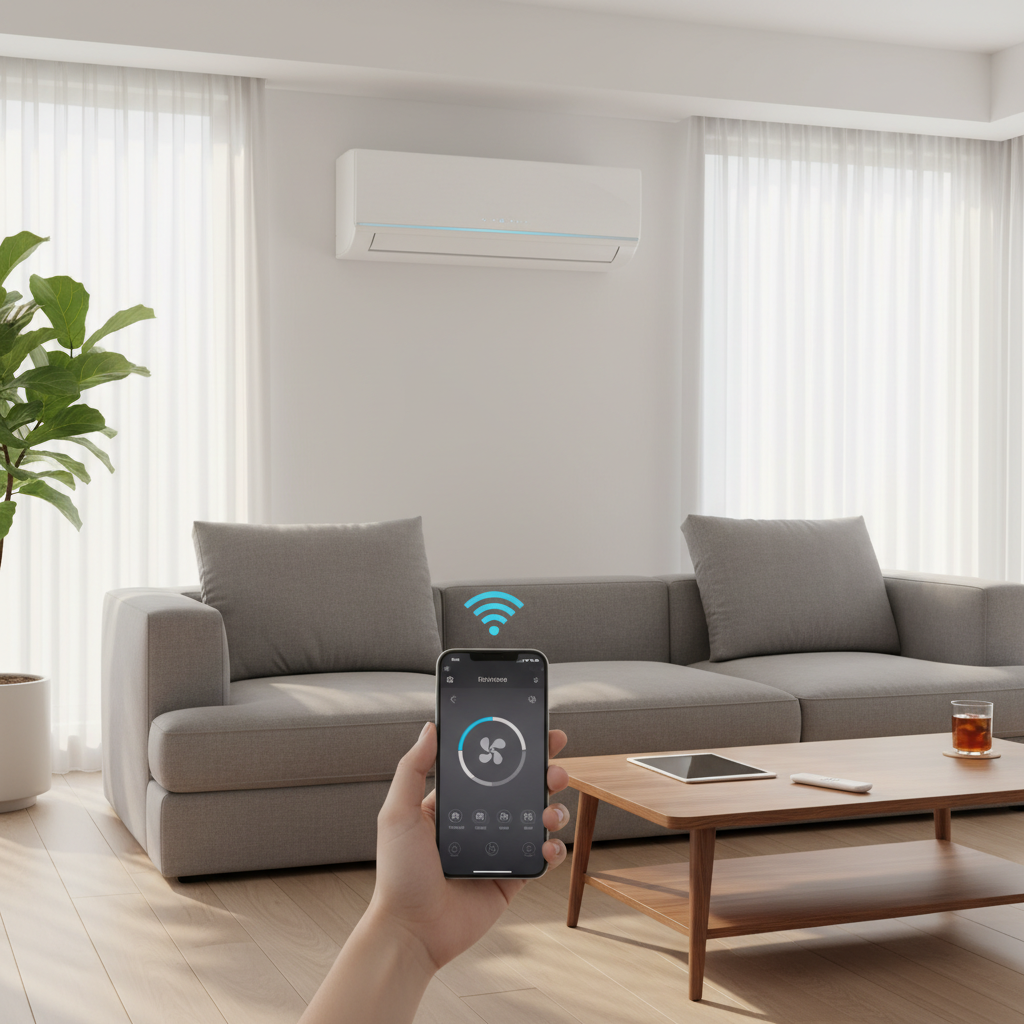
- Wi-Fi Connectivity & App Control: The cornerstone of a smart AC. A dedicated smartphone app allows you to remotely turn the unit on/off, adjust temperature, change modes, and set schedules from anywhere.
- Voice Control: Integration with popular smart assistants like Amazon Alexa and Google Assistant allows for hands-free operation. Many models also support Apple HomeKit or Matter for broader smart home ecosystem compatibility.
- Scheduling: Program your AC to turn on or off at specific times, ensuring your home is cool when you arrive and saving energy when you’re away or asleep.
- Geofencing: Some advanced models can use your phone’s location to automatically adjust settings or turn off the unit when you leave home and turn it back on as you approach.
- Energy Usage Reports: Features that provide data on your AC’s power consumption, helping you identify opportunities for further savings.
- Air Filtration & Dehumidification: Beyond cooling, many units offer advanced air filters to improve indoor air quality and built-in dehumidifier functions to remove excess moisture from the air, enhancing comfort. The Zafro 16,000 BTU Portable Air Conditioner, for example, doubles as a dehumidifier.
When evaluating features, consider what truly adds value to your daily life. Voice control might be a priority for some, while detailed energy reports could be crucial for others.
Brand and Price
The market for smart air conditioners includes a wide array of reputable brands, each offering various models at different price points. Understanding the landscape can help you make an informed decision within your budget.
-
Leading Brands:
- GE: Known for versatile units like the GE 11,000 BTU Smart Heat/Cool, offering both heating and cooling, and innovative designs like the low-profile GE Profile Clearview.
- Midea: Often praised for quiet and efficient inverter technology, such as the Midea U Inverter Window Air Conditioner and the Midea Duo portable unit.
- LG: Offers powerful and quiet dual inverter technology in their smart Wi-Fi air conditioners, suitable for larger rooms.
- Hisense: Provides efficient and quiet window ACs with inverter technology.
- Windmill: Stands out for stylish designs and quiet operation, often suitable for smaller spaces.
- TCL: A newer entrant known for Matter-compatible smart inverter window ACs.
- Dreo, Zafro, Friedrich: Other notable brands offering portable and window units with various smart features.
-
Price Considerations: Smart air conditioners can range significantly in price, typically from a few hundred dollars for basic window or portable units to over a thousand for high-capacity, feature-rich models or mini-split systems.
- Budget-Friendly Options: Brands like Hisense often offer competitive pricing without sacrificing essential smart features.
- Mid-Range Options: Midea, LG, and GE provide a good balance of features, performance, and price.
- Premium Options: Friedrich Kuhl series units are known for commercial-grade durability and performance but come at a higher cost.
When comparing prices, look beyond the initial purchase cost. Consider the Energy Star certification, as more efficient units can lead to significant long-term savings on electricity bills. Reviews often highlight value for money, balancing features against performance.
Comparing Popular Smart Air Conditioner Models (2026)
To simplify your decision, here’s a comparison of some highly-rated smart air conditioners with Wi-Fi control in 2026:
| Model | Type | BTU Range | Key Smart Features | Energy Efficiency (EER/Inverter) | Standout Feature |
|---|---|---|---|---|---|
| GE 11,000 BTU Smart Heat/Cool AWGP12 | Window | 11,000 | App & Voice Control (Alexa, Google), Usage Reports, IFTTT | Energy Star Certified | Versatile heating and cooling combination |
| Midea U Inverter Window Air Conditioner | Window | 8,000 – 12,000 | App & Voice Control (Alexa, Google, HomeKit, Matter) | EER 15, Inverter | Ultra-quiet, unique “U” shape for window functionality |
| LG Dual Inverter Smart Wi-Fi Air Conditioner | Window | 8,000 – 23,500 | App & Voice Control (Alexa, Google) | EER 14.7, Dual Inverter | Excellent for large rooms, efficient cooling |
| Dreo Portable Smart Air Conditioner AC516S | Portable | 14,000 | App & Voice Control (Alexa, Google), Usage Reports | Energy Star Certified | Portable, no drainage required, oscillating airflow |
| Hisense 10000-BTU Window AC Inverter WiFi | Window | 10,000 | App & Voice Control (Alexa, Google), Usage Reports | EER 15, Inverter | High efficiency, relatively quiet |
| Windmill AC | Window | 6,000 – 8,300 | App & Voice Control (Alexa, Google) | EER 11.9 – 12 | Stylish design, quiet operation for small spaces |
| Zafro 16,000 BTU Portable Air Conditioner | Portable | 12,000 – 16,000 | App & Voice Control (Alexa, Google), Usage Reports | Energy Star Certified | Powerful cooling, built-in dehumidifier |
Note: BTU ranges for models may vary slightly based on specific product configurations.
This table provides a quick overview, but deeper research into individual model reviews is always recommended. For instance, while the Friedrich Kuhl Series offers robust performance, its high price might deter some buyers, making it less suitable for every budget.
Comprehensive Buying Guide for Smart Air Conditioners
Purchasing a smart air conditioner is an investment in your home’s comfort and energy efficiency. Follow these steps to make the best choice.
1. Determine Your Usage Needs
Before diving into models, clearly define what you need from an AC:
- Room Area: Measure the length and width of the room(s) you intend to cool to calculate the square footage. This is crucial for determining the necessary BTU.
- Occupancy: Consider how many people regularly use the space. More occupants generate more heat, requiring a slightly higher BTU.
- Usage Frequency: Will the AC run all day, or only at specific times? This impacts the importance of advanced scheduling and energy-saving features.
- Environmental Factors: Note if the room is sunny, heavily shaded, or a kitchen, as these factors influence BTU requirements.
- Smart Home Ecosystem: Do you already use Amazon Alexa, Google Assistant, or Apple HomeKit? Choose an AC compatible with your existing setup for seamless integration.
2. Research and Compare
Once you understand your needs, it’s time to research:
- Explore Types: Decide whether a window, portable, or mini-split unit best suits your installation capabilities and flexibility requirements. If you have central air, focus on smart thermostats.
- Feature Checklist: Make a list of essential smart features (Wi-Fi, app control, voice control, scheduling, geofencing, energy reports, dehumidification, air filtration) and prioritize them.
- Read Reviews: Consult expert reviews from reputable sources like PCMag and Tom’s Guide, as well as user testimonials, to gauge real-world performance, noise levels, and app reliability.
- Compare Models: Use comparison tables and product specifications to weigh the pros and cons of different models from various brands.
3. Selection and Purchase
With thorough research, you’re ready to buy:
- Visit Stores: If possible, see units in person. This helps you assess their physical size, design, and noise levels (though store environments might not be perfectly indicative).
- Choose Reputable Vendors: Purchase from authorized dealers or well-known retailers to ensure product authenticity, warranty support, and reliable after-sales service.
- Inspect Before Payment: Upon delivery or pickup, check the unit for any visible damage. Confirm all components and accessories are included.
4. Installation and Maintenance
Proper installation and regular maintenance are key to longevity and efficiency:
- Professional Installation: For window units, ensure secure installation to prevent leaks and maximize efficiency. Portable units are generally easy to set up, but make sure the exhaust hose is properly sealed. Mini-split systems absolutely require professional installation.
- Follow User Manuals: Adhere to the manufacturer’s instructions for initial setup and usage. This ensures you leverage all smart features correctly.
- Regular Cleaning: Clean or replace air filters every 2-4 weeks during heavy use. Dirty filters restrict airflow, reduce efficiency, and can impact air quality.
- Seasonal Checks: Before the cooling season, inspect the unit for any blockages, clean coils, and ensure all connections are secure.
Following this guide will help you confidently choose and maintain a smart air conditioner that perfectly fits your home and lifestyle.
Smart Tips for Energy-Efficient Air Conditioner Use
Even the best smart air conditioner needs to be used wisely to maximize energy savings. Here are some expert tips to keep your bills low and your comfort high:
- Set the Ideal Temperature: Aim for a comfortable yet energy-efficient temperature, typically around 78°F (25-26°C) when home. Avoid drastically lowering the thermostat, as this makes the AC work harder. Smart scheduling can automatically adjust the temperature when you’re away or asleep.
- Utilize Scheduling and Geofencing: Program your smart AC to turn on about 30 minutes before you arrive home and turn off when you leave. Many smart AC apps offer geofencing, which automates this process by detecting your proximity to home.
- Regular Filter Cleaning: A dirty air filter restricts airflow and forces your AC to work harder, consuming more energy. Clean or replace filters every two to four weeks during peak usage to maintain optimal efficiency and air quality.
- Seal Your Space: Keep windows and doors tightly closed when the AC is running. Use weatherstripping and caulk to seal any leaks around windows and doors to prevent cool air from escaping and warm air from entering.
- Combine with Fans: Ceiling fans or oscillating fans can make a room feel several degrees cooler, allowing you to set your AC thermostat higher without sacrificing comfort. Remember to turn off fans when you leave the room, as they cool people, not spaces.
- Block Sunlight: Use blinds, curtains, or shades to block direct sunlight during the hottest parts of the day. This significantly reduces heat gain and lessens the load on your air conditioner.
- Use Eco Mode: If your smart AC has an “Eco Mode” or “Sleep Mode,” utilize it. These modes are designed to operate more efficiently by making slight temperature adjustments or reducing fan speed during periods of less activity.
“Smart air conditioners aren’t just about convenience; they’re powerful tools for energy management. Leveraging features like smart scheduling and usage reports can cut your cooling costs significantly without compromising comfort.” – Alex Johnson, HVAC Technology Analyst
Conclusion
Choosing the best smart air conditioner with Wi-Fi control in 2026 means investing in a cooler, more comfortable, and energy-efficient home. From understanding BTU requirements and evaluating different types to exploring cutting-edge smart features like inverter technology, voice control, and geofencing, the options are vast and designed to simplify your life. Top brands like Midea, GE, LG, and Hisense offer robust solutions tailored to various needs and budgets. By considering your specific requirements, leveraging smart technologies, and practicing energy-saving habits, you can transform your home environment.
Are you ready to experience the future of home cooling?
Frequently Asked Questions
What is the most energy-efficient smart air conditioner?
Many smart air conditioners with inverter technology, like the Midea U Inverter Window AC, are highly energy-efficient. Inverter compressors continuously adjust their speed, leading to consistent cooling, quieter operation, and significant energy savings compared to traditional units that cycle on and off frequently. Always look for Energy Star certification.
Can I control my smart AC from anywhere?
Yes, a primary benefit of smart air conditioners with Wi-Fi control is remote access. Through a dedicated smartphone app, you can turn your unit on or off, adjust settings, and monitor its status from virtually anywhere, whether you’re at work, on vacation, or simply in another room.
How does Wi-Fi control work on an AC unit?
Smart ACs have a built-in Wi-Fi radio that connects to your home’s wireless network. This connection allows the unit to communicate with a manufacturer-provided smartphone app. Your commands from the app travel over the internet to your AC, enabling remote control and access to smart features like scheduling, voice control integration, and energy reports.
Do smart air conditioners work with voice assistants like Alexa or Google Assistant?
Most modern smart air conditioners are designed to integrate seamlessly with popular voice assistants such as Amazon Alexa and Google Assistant. This allows you to control your AC with simple voice commands, such as “Alexa, set the AC to 72 degrees” or “Hey Google, turn off the living room air conditioner,” enhancing convenience.
Is it worth upgrading to a smart AC with Wi-Fi?
Upgrading to a smart AC with Wi-Fi is often worthwhile due to enhanced convenience, potential energy savings, and integration with your smart home ecosystem. Features like remote control, scheduling, geofencing, and energy reporting can lead to greater comfort and lower electricity bills, making it a valuable investment for many households.
What is Matter compatibility in smart ACs?
Matter is a new universal standard for smart home devices, designed to improve interoperability between different brands and ecosystems. A Matter-compatible smart AC, like some TCL models, can seamlessly connect and communicate with other Matter-certified devices and platforms (Alexa, Google Home, Apple HomeKit, SmartThings), offering greater flexibility and future-proofing your smart home setup.
How do I calculate the right BTU for my room?
To calculate the right BTU, first measure your room’s length and width in feet and multiply them to get the square footage. Then, multiply the square footage by 20 to 25 BTUs. For instance, a 200 sq ft room needs 4,000-5,000 BTUs. Adjustments are needed for factors like sunny rooms, high ceilings, or kitchens.